Artist Kelly Cheatle on Why Politics Needs More Creatives

This interview is for informational purposes only. The National Guild for Community Arts Education does not endorse or oppose any political candidate. Views expressed are the interviewee’s own.
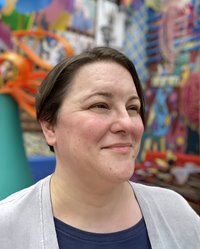
 

The National Guild for Community Arts Education believes the arts are crucial for a thriving community and that artists are pivotal in shaping the world. Kelly Cheatle shares that vision.

An artist who has created community-built public installations worldwide, Kelly pivoted during the pandemic to organize for community needs. Now, she wants to apply that same creative problem-solving to local government.

 Whether fighting corporate overreach or designing accessible public art, Kelly believes real change happens when community comes together.

Below, she shares how artists can transform politics, why she wants to bring change to local government, and what happens when creative minds take on broken systems.


Please share a little bit about your artist background and your interest in public policy. 

I’m an artist who’s traveled the world creating massive, community-built sculptures made entirely out of balloons. I spent years navigating public arts funding to make our work free for the public to visit because I believe art should be accessible to everyone, as should power.

When the pandemic hit, and gathering thousands of people indoors was the last thing we wanted to do, I shifted gears. I focused on meeting urgent personal protective equipment manufacturing needs and even helped design clear panel masks for our Deaf neighbors. Since then, I’ve continued to organize behind the scenes, building with community, and pushing for policies that serve people, not profit. The biggest effort so far has been a multi-year campaign against a Business Improvement District that would have privatized Rochester’s downtown. We stopped them temporarily, but they are back at it, trying to stack City Council with people who will help them push it through.


What sparked your interest in running for Rochester City Council?

What sparked it was honestly a mix of frustration and love. I love this city and the people in it, but I’ve seen too many decisions made without working families, renters, artists, and all the folks just trying to get by. I got tired of watching our voices get sidelined while developers and insiders made the calls.

I’ve spent years organizing behind the scenes, helping others fight for good policy. But time after time, we ran into the same wall: elected officials who just weren’t listening. At some point I realized, instead of spending all our energy trying to change the mind of an elected person, maybe we just need to change the elected person. I’m not running to be in power. I’m running to share it, and to make sure it actually reaches the people who need it most.


How has your experience as an artist shaped your perspective on governance and policy-making? 

Being an artist has taught me that collaboration is everything. You can have a big vision, but it only comes to life when you listen, adapt, and work with others. The best projects I’ve been part of were built by dozens, sometimes hundreds, of hands. That kind of collective effort is exactly what good governance should look like.

Art also teaches you to look deeper, to ask why things are the way they are, and to imagine something better. I bring that same mindset to policy. I don’t accept “that’s just how it is” as an answer. I believe we can design systems that actually serve people, especially the folks who are usually left out.


Did you face any challenges or biases as an artist entering politics? 

I think at first they didn’t know what to do with me. I came in with a strong background in marketing and communication, so I was able to help inform and mobilize community quickly. But I was also more willing than most to step out of line and respond creatively, and that made some powerful folks uncomfortable.

The establishment tried to push me out. When I started getting in the way, they blocked me from my local Democratic Committee seat. But I knew the rules, petitioned myself back on, and won. I’m stronger for the experience. If anything, it proved what I already knew: you don’t wait for permission to fight for what’s right. You just get to work.

Right now, my biggest challenge in my City Council campaign is fundraising. I’m doing fairly well, people are giving what they can, and I’m grateful for every dollar. But my opponents are backed by big donors who don’t want someone like me in office. That means I have to work five times harder to reach people. Thankfully, creativity and years of being underfunded have taught me how to stretch a budget and still make an impact!


What unique strengths do artists bring to government positions? 

Artists bring imagination, persistence, and a deep understanding of how to work with people. We know how to create something from nothing, how to adapt on the fly, and how to stay focused on the big picture while handling a million moving parts. We’re used to listening, collaborating, and building trust. Without that, the work doesn’t happen. People who can look at what’s broken and imagine something better, then work with others to build it are exactly what’s needed right now!


What advice would you give to artists who want to enter politics or feel hesitant about entering? 

Just like any art practice, it takes time to develop. You don’t have to jump straight into running. Start by digging in and helping on other campaigns. Learn the framework, see what works, and build your skills and confidence along the way.

Artists already have what it takes. We know how to listen, communicate, and create something that connects with people. Politics needs more of that. Don’t wait for permission. Start where you are, and keep showing up. And when success starts to come, stay sharp. Service is a calling, but politics is ugly. Build your team with people you truly trust. Power shifts the way people move around you. Some people will suddenly want to be close to you, others might start acting differently when they see you as a threat. 

You will likely have to negotiate to be effective but never lose sight of your core truth. That’s your compass. That’s what will keep your work real, and keep you grounded no matter how high the stakes get.


How can local governments better support and engage with artists and creative professionals? 

Artists have a critical role in society. We reflect, challenge, and imagine what’s possible. Our art shouldn’t only be valued when it turns a profit. The arts help people process the world around them and connect to each other in ways that data and policy can’t. We reflect, challenge, imagine, and help communities make meaning. 

While supporting arts programming and public artworks is crucial, the most powerful thing local governments can do is make life more livable for everyone. We deserve stable housing, affordable healthcare, time to rest, and space to breathe. 

Public performances should be supported with both funding and intentional efforts to expand access, like providing ASL interpretation and removing financial barriers so more people can participate. And when cities use images of public art to promote themselves, artist credits should be included, if not highlighted! Respecting and uplifting the creators behind the work is part of building a culture that values art and the people who make it.

Artists think differently, and bringing that perspective into government can help challenge stuck systems and spark new ideas. It’s not just about putting art on walls, it’s about putting creative problem-solvers at the table. I’m excited about the possibilities this potential new role could open up, and how it could help bridge policy and imagination in ways that truly serve our communities.


To learn more about Kelly Cheatle's artwork visit www.airigami.com

Link provided for informational purposes about the interviewee’s artwork and not as an endorsement.

_______________
NEA Grant Terminations and NEA Funding Threatened

On Friday, May 2, 2025, the National Endowment for the Arts (NEA) sent out letters to FY24 and FY25 grantees. Some were told their funding would be cut off by May 30, while others had their grants pulled entirely, because their projects supposedly no longer aligned with the current administration’s priorities. At the same time, we’re seeing a mass departure of incredible NEA staff, people who have long championed community arts and education, leaving the agency. And now, just weeks after dismantling the National Endowment for the Humanities (NEH), the administration has proposed eliminating the NEA in the FY26 federal budget.

For nearly 60 years, the NEA and NEH has helped make the arts and humanities accessible in every corner of the country. From rural towns to big cities, it’s funded programs that bring people together, strengthen schools, and build community.

This isn’t just about “art for art’s sake.” This is about jobs, healing, culture, democracy, and joy.

Here’s what you can do right now:
 

Received a Letter from the NEA? Start Here.

Activate Your Power

Don’t wait for someone else to do it. Our stories move policy.

Show Love to NEA/NEH Staffers
A lot of incredible folks have been holding it down at the NEA/NEH for years, fighting for our field behind the scenes. If they’ve supported you or your work, take a moment to say thank you, write a note, or shout them out. Let’s remind them they matter.

YOU Can Run for Office
Seriously. We need artists, cultural workers, educators, and organizers making decisions about our communities. The Guild will be partnering with orgs that train and support folks like you to run for office (all aligned with our nonprofit status, of course). More info coming soon. If you’ve been thinking about it, this is your sign.

What's At Stake

The National Guild joins so many other orgs in saying, “Cutting the NEA and NEH is a mistake.”

For nearly 60 years, the NEA and NEH has helped make the arts and humanities accessible in every corner of the country. From rural towns to big cities, it’s funded programs that bring people together, strengthen schools, and build community.

This isn’t just about “art for art’s sake.” This is about jobs, healing, culture, democracy, and joy.
 
We believe:

The arts are infrastructure.
Culture is not expendable.
Our creativity is political and powerful.

We’re in a moment that calls for all of us to show up. Let’s do it together with purpose, with heart, and with each other.

Congresswoman Nydia Velázquez Reintroduces National Community Arts Education Day Bill

On Tuesday, February 25th, the Office of Congresswoman Velázquez (NY-07) reintroduced a resolution that designates February 28th as National Community Arts Education Day. 

The goal is to bring more recognition to the importance and benefits of a diversified arts education model. 

The bill recognizes community arts education as: 

  • A transformative and participatory practice that engages individuals in a community context.
  • Wherein community arts educators provide instruction to a diverse range of students during in-and-out of school settings. 
  • A means for students to enhance self-confidence and critical learning skills. 

To read the bill text click here.


Endorse the Bill! 

Show your organization's support for this crucial legislation alongside the National Guild for Community Arts Education and Congresswoman Velázquez. Sign onto the endorsement form and amplify our collective voice using this form.


A Message from Congresswoman Velazquez

To further her celebration of the reintroduction of her resolution designating February 28th as National Community Arts Education Day, Congresswoman Velázquez (NY-07) presents a message to community arts educators and their supporters that speaks to the bill's importance and arts education in general. The Congresswoman discusses the importance of a diversified education model and its importance in the current administration. 

International Longshoremen’s Association’s Strike Checklist and Hurricane Helene Mutual Aid Resources

As our communities are still recovering from Hurricane Helene, we also want to prepare our community for the International Longshoremen's Association's strike which may cause off-season items or international items that come through Eastern ports to be disrupted. Learn more about the strike here or from a news source you trust. 

Please remember that America has a well-stocked supply of goods and produce in warehouses across the country, so the effects of the strike may be felt in 4-6 weeks. We have time to plan, assess our needs, and prepare accordingly.

Our Operations and HR Director Precious Diamond Blake compiled a checklist to help prepare for potential shortages resulting from the strike, being mindful of stocking up with only the amount your household needs: 

  • Stock up on nonperishable goods
  • Consider buying local and seasonal food, produce, wine, and beer
  • Look for farms or gardens in your area that are selling fall/wintertime produce
  • Download Apps like TooGoodToGo or Food Hero to reduce food waste and support local businesses
  • Stock up on essential household and cleaning items
  • Prescription meds: Ask for a refill early if you can
  • Have a first aid kit in case medical supplies are affected
  • Stock up on over-the-counter meds like pain relievers, and allergy medicines or consider local herbal remedies you can source naturally
  • Fuel: if you drive, consider making sure your tank is always on full
  • Seasonal preparation: with winter coming, ensure you have proper winterizing and adequate forms of heating
  • Deliveries and holiday shopping: expect delays. Make arrangements to mail things early and expect delays of shipments or unavailability of specialty items
  • Information and Communication: stay up to date on the strike through news outlets you trust

In the United States, there is a dual ongoing public health crisis of food waste and food apartheid. Support your local food pantries by donating food/money or volunteering your time. To avoid food waste, you can plan meals ahead and look into local compost sites where you can divert your food waste from landfills.

Finally, remember to check on your neighbors, friends, and dependents to work together for food sharing, assistance, and communication.


Hurricane Helene Aid Resources

We've compiled of list of mutual aid groups and resources if you'd like more info on how to help those affected by Hurricane Helene. (This list is everchanging if you'd like to contribute, please email programs@nationalguild.org): 

Other Resources

National Community Arts Education Day to be Recognized Nationwide

New York, NY – The National Guild for Community Arts Education is proud to announce a groundbreaking milestone in our advocacy efforts for arts education across the nation. Through close collaboration with Representative Nydia Velazquez's office, we have successfully crafted a national resolution recognizing February 28th as National Community Arts Education Day. This resolution will be formally introduced in Congress on February 28th, 2024.

National Community Arts Education Day aims to celebrate and highlight the invaluable contributions of community-based arts education programs in fostering creativity, nurturing talent, and building vibrant communities nationwide. This designation is a testament to the tireless dedication of educators, administrators, artists, and advocates who work tirelessly to ensure that arts education is accessible and inclusive for all.

The journey to achieving this milestone has been one of partnership, perseverance, and passion. The National Guild for Community Arts Education extends its heartfelt gratitude to Representative Nydia Velazquez for her unwavering support and leadership in championing this cause. Her commitment to the arts and education has been instrumental in driving this initiative forward.

As we look ahead to February 28th, 2024, the National Guild for Community Arts Education calls on communities, organizations, and individuals across the nation to join us in celebrating National Community Arts Education Day. Let us come together to honor the transformative impact of arts education and reaffirm our commitment to ensuring that every individual has access to the enriching benefits of the arts.


For more information on National Community Arts Education Day and the National Guild for Community Arts Education's advocacy efforts, please visit www.nationalguild.org or contact Tera Proby, Director of Advocacy at teraproby@nationalguild.org.


**About the National Guild for Community Arts Education:**

The National Guild for Community Arts Education is a national association of organizations, educators, and artists dedicated to ensuring all people have opportunities to maximize their creative potential. Through advocacy, professional development, and resources, the Guild supports and advances the field of community arts education.


Endorse This Resolution


Contact:

Tera Proby

Director of Advocacy

National Guild for Community Arts Education

teraproby@nationalguild.org

The Bipartisan Creative Workforce Investment Act is Introduced in the House and the Senate

On January 10, the Creative Workforce Investment Act, a bipartisan legislation aimed at empowering the creative workforce and providing greater access to the arts, was introduced in the House by Congresswoman Teresa Leger Fernández (D-NM), Congressman Jay Obernolte (R-CA), and Congressman Ted Lieu (D-CA) with its companion bill introduced in the Senate by Senator Ben Ray Luján (D-NM).

The National Guild for Community Arts Education's Executive Director, Quanice Floyd, lent her support of the bill stating, “This legislation provides necessary funding to arts and creative workforce programs to ensure that the arts and arts education is accessible to everyone. We are particularly proud of the Congresswoman and Senator’s support of community arts education by acknowledging the need for holistic experiences of arts education learning through in and out-of-school programming in the legislation. This bill reinforces the importance of arts and arts education and provides a pathway to such a critical investment in the country. We are thankful for the Congresswoman and Senator’s support of the arts and arts education in this bill.”

“In New Mexico, we know that our creative economy — the people who make the beautiful art we get to enjoy — have the power to move us all while creating good-paying jobs and growing our economy,” said Congresswoman Leger Fernández. “We often overlook this economic engine and don’t invest publicly in this important industry the same way we do in agriculture or manufacturing. This bill would change that, it will create a new, competitive grant program so every community in America has the chance to capitalize on the transformative power of art, so artists have the backing they need to create innovative public art, and so our creative economy can continue to grow and thrive.”

"Background:

Key provisions of the Creative Workforce Investment Act include:

  • National Grants for Arts and Creative Workforce Programs: Establishes a grants program to support arts and creative workforce initiatives that create publicly accessible art while employing individuals in the local community.
  • Uses of Funds: Specifies a range of programs eligible for funding, including concerts, storytelling initiatives, murals, films, theatrical productions, and support for arts in educational and community spaces, among others.
  • Reporting Requirements: Mandates annual reporting to Congress on grant outcomes, employment duration, earnings, and employment status of individuals involved in the programs.
  • Authorization of Appropriations: Authorizes $300 million in appropriations for fiscal years 2024 through 2026 to support the program."

Read the entire press release here

Congresswoman Alma Adams Introduces the HBCU Arts Act

On October 6, 2023, Congresswoman Alma Adams introduced the HBCU Arts Act, emphasizing the importance of arts education and the role of Historically Black Colleges and Universities (HBCUs) in nurturing African American artists in the United States. This legislation aims to enhance investment in HBCU arts education and provide students of color with affordable access to arts and culture programs, with a focus on preserving, studying, and displaying works by Black artists.

The HBCU Arts Act:

  1. Offers financial and other assistance to students in arts, arts education, and cultural programs.
  2. Establishes outreach programs and development offices for art, arts education, and cultural arts departments.
  3. Provides comprehensive support services for arts students, including faculty and peer mentorship, work-based learning opportunities, guidance counseling, and career advising.
  4. Focuses on exhibiting, maintaining, monitoring, and protecting Black art collections in exhibition and storage.
  5. Creates well-paid apprenticeships, internships, and fellowships through partnerships with nonprofit arts and cultural institutes.

The National Guild for Community Arts Education is proudly one of the supporters of this bill which also include NAfME, Feierabend Association for Music Education, and Americans for the Arts

Quanice G. Floyd, Executive Director of the National Guild for Community Arts Education, emphasizes the enduring significance of HBCUs in the arts community by stating, “HBCUs continue to serve and produce some of our country's most talented Black artists, educators, and cultural specialists. Further, our country's HBCUs continue to provide invaluable education to students of various socio-economic and ethnic backgrounds. In turn, HBCUs create a vital pipeline for a more diverse arts industry."

You can read the full press release here:

https://adams.house.gov/media-center/press-releases/congresswoman-alma-adams-introduces-hbcu-arts-act

G2 Insurance strives to demystify directors and officers insurance for community arts education orgs

G2 Insurance, a Guild Business Affiliate and certified B Corp insurance provider specializing in nonprofits, has created a brief overview for Guild members to help them understand the basics of Directors and Officers Insurance. D&O insurance indemnifies individual directors and officers against losses that the organization is not legally or financially able to cover.

Read more on G2 Insurance's website.

286 Organizations Receive Unrestricted Grants Averaging $10 Million Each

June 15, 2021

MacKenzie Scott, the third-wealthiest woman in the world, has announced that she is giving grants averaging $10 million each to 286 equity-oriented organizations. The organizations chosen focus on supporting higher education, arts and culture, and community engagement; centering ethnic and religious minorities; and fighting global poverty. The list of grantees includes many community arts education organizations, Guild members, and members of the Guild's extended "family"!

In a piece on Medium, Scott explains her unconventional approach to philanthropy, which forgoes the foundation model, aims to center organizations that work with marginalized communities and/or have been historically excluded from funding streams, and, perhaps most significantly, imposes no restrictions on how the funding can be used (Vu Le of Nonprofit AF has written extensively about the need for this):


"In this effort, we are governed by a humbling belief that it would be better if disproportionate wealth were not concentrated in a small number of hands, and that the solutions are best designed and implemented by others. Though we still have a lot to learn about how to act on these beliefs without contradicting and subverting them, we can begin by acknowledging that people working to build power from within communities are the agents of change. Their service supports and empowers people who go on to support and empower others.

These are people who have spent years successfully advancing humanitarian aims, often without knowing whether there will be any money in their bank accounts in two months. What do we think they might do with more cash on hand than they expected? Buy needed supplies. Find new creative ways to help. Hire a few extra team members they know they can pay for the next five years. Buy chairs for them. Stop having to work every weekend. Get some sleep.

Because we believe that teams with experience on the front lines of challenges will know best how to put the money to good use, we encouraged them to spend it however they choose. Many reported that this trust significantly increased the impact of the gift."


In the piece, Scott also explains why she considers arts and cultural institutions an important sector to invest in:

"Arts and cultural institutions can strengthen communities by transforming spaces, fostering empathy, reflecting community identity, advancing economic mobility, improving academic outcomes, lowering crime rates, and improving mental health, so we evaluated smaller arts organizations creating these benefits with artists and audiences from culturally rich regions and identity groups that donors often overlook."


We congratulate all of the organizations receiving grants, and are intrigued to see how the field of philanthropy continues to shift towards equity. Visit the Community Centric Fundraising website to learn about the movement to evolve how fundraising is done in the nonprofit sector (Community Centric Fundraising is not affiliated with MacKenzie Scott).


Read the full piece on Medium for the list of grantees and more information about how the organizations were chosen.

For more, read coverage in the New York Times.

Arts Education Council’s Response to Recent AFTA News + Upcoming National Town Hall

June 3, 2021

In a statement, the Arts Education Council speaks on Americans for the Arts (AFTA)’s lack of transparency in their failure to disclose findings from their recent investigation, and their lack of field engagement throughout the process since the council first issued a call for accountability and list of demands to AFTA in December 2020. The statement references a similar statement by the Performing Arts Alliance expressing their disappointment in "the missed opportunity for AFTA to begin the process of full transparency and accountability within the Arts community".

An excerpt from the Arts Education Council's statement: "This council publicly called for the resignations of Bob Lynch, Mara Walker, and Marc Ian Tobias in December 2020. More than six months after our calls for accountability, the public retirement of Mr. Lynch and the silent departures of Ms. Walker and Mr. Tobias are a first step to rebuilding the AFTA that this country’s arts and culture sector deserves, but it is only that: a first step. While we welcome the news that these senior leaders are no longer at the helm of Americans for the Arts, AFTA has much work yet to do to repair the harm caused — most directly to BIPOC-led arts and culture organizations — by decades of gatekeeping and resource-hoarding, spearheaded by their senior leadership…we were also disappointed to hear that there would not be a public, national search for Mr. Lynch’s replacement, and hope that Brig. Gen. Bivens spearheads a transparent and public process that will include soliciting member input so that senior operations positions will be filled with transformational community leaders who have proven their commitments to racial equity in the arts."

The Arts Education Council will now tranform from an advisory council affiliated with and in service to AFTA, into a national Progressive Arts Education Coalition working with leaders across the country to advance a more equitable arts education, creative economy, and cultural sector. They will hold an open national town hall slated for National Arts in Education Week (September 12–18) to refine a set of values and a national agenda for the arts education field. You can sign up for their mailing list to be alerted when registration for the Town Hall goes live.

Read the Arts Education Council's full statement here.

We agree with all points raised about continued lack of accountability and transparency, and look forward to seeing the Arts Education Council's next steps take shape. Our partnership with (and membership to) AFTA continue to be ceased until we see true accountability and change.