Funding, Advocacy, and Community Arts Panel – Reflections from the National Guild For Community Arts Education Conference
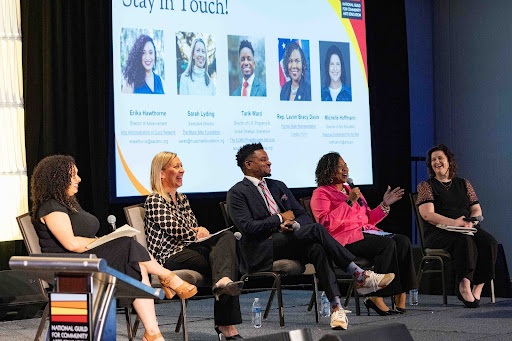
Photographed from left to right: Erika Hawthorne, Sarah Lyding, Tarik Ward, Rep. Lavon Bracy Davis, Michelle Hoffmann. Photo credit: Dr. Ceylon Mitchell II, M3 | Mitchell Media & Marketing, LLC 


As artists and arts administrators, we are driven by purpose and passion for the work we do on behalf of the communities we serve and belong to. Advocacy is a natural extension of our commitment to our organizations’ missions, values, and communities and it takes on various forms. Sometimes it includes contacting representatives, engaging in advocacy events, and directly collaborating with lobbyists to drive legislative change. Often, we advocate through grant applications and by building relationships with funders to support our community arts initiatives. Other times, it involves working within our organizations to establish fair policies, compensation, and authentic community engagement practices. 

When we perceive advocacy and policy change as daunting, inaccessible concepts, it's important to remember that advocacy is inherent to our roles, and policies are simply the formal language that guide how organizations or government entities operate, and policies can be changed. Understanding political landscapes and navigating specific systems enhances our ability to advocate effectively. This includes strategizing for financial resources, partnerships, or formal policies in alignment with the dynamics of the spaces we engage with.

At the National Guild for Community Arts Education Conference, I had the pleasure of speaking with Sarah Lyding, Executive Director of the The Music Man Foundation, Tarik Ward, Director of U.S. Programs & Global Strategic Operations for The ELMA Philanthropies Services, Representative Lavon Bracy Davis, Florida State Representative, and Michelle Hoffmann, Director of Arts Education at the National Endowment for the Arts

We explored successes, challenges, and opportunities at the nexus of funding, advocacy, and community arts. The conversation underscored the significance of collaboration, equity, and strategic investment in propelling advocacy and community arts initiatives forward. Our dialogue served as a reminder of the intricacies involved in advocating for funding across different spheres—private philanthropy, local government, and federal government—each requiring a tailored approach. 


Below are a few offerings from the panelists and highlights of wisdom gathered from the audience via an interactive activity.  

Advocacy Tips:

  • Build Relationships: Build relationships with funders and advocate for the funding opportunities you require to advance your organization’s mission. 

  • Educate Yourself: Understand decision makers' priorities and find common ground. Also, learn about their decision-making processes and timelines to align your efforts. 

  • Nonprofit Advocacy: Nonprofits can engage in advocacy efforts around issues but should avoid political candidate endorsements.

  • Funder Support: Private philanthropy can support advocacy efforts such as educational and community engagement initiatives, and advocacy training.  Private philanthropy cannot support any lobbying activities.

  • Engage with Your Service Organizations: Collaborate with national arts service organizations to amplify and address your needs and access resources available through your regional and local arts agencies.  

  • Serve on Grant Review Panels: Gain insight into the grant review process and advocate for improvements.

  • Seek Aligned Funding Opportunities: Seek funding opportunities that align with your goals rather than altering your projects to fit available grants.


Resources: 


In an interactive activity, audience members highlighted the following funding needs as crucial for advancing their arts advocacy efforts:


Funding Needs to Advance Advocacy Efforts:  

  • General Operating Support: Vital for sustaining day-to-day operations.

  • Funding for Full-Time Salaries: Including investment in full-time teaching artists.

  • Investment in Benefits: Funding for health insurance for teaching artists and other freelance performing arts educators. 

  • Multi-Year Funding: Providing stability and continuity.

  • Advocacy Funding: Compensating staff engaged in direct lobbying efforts and supporting coalition building.

  • Professional Development Funding: Enabling staff (including teaching artists, even if they are contractors) to travel for workshops, conferences, and capacity-building programs to enhance organizational effectiveness and foster collaboration.

  • Continuing Education Funding: Tuition assistance programs to encourage staff to further their education and training, benefiting the organization and the sector at large. 

  • Operational and Technology Assistance: Covering software licensing, website development, resource hubs, customer relationship management systems, and sales platforms. 

  • Communications Support: Resources for Authentic Storytelling and Effective Communication Strategies.

  • Evaluation and Research Funding: Essential for measuring outcomes and informing decisions.

  • Infrastructure Support: For technology and physical spaces.

  • Support for Network and Coalition Building: Facilitating connections and building cohorts for peer learning and resource sharing. 

  • Program Development Support: Including curriculum development and program equipment upgrades.

  • Networking Support: Enabling staff to engage with peers, funders, and national conferences.

  • Funding to Create Local and Regional Advocacy Toolkits: Fostering collaboration and networking within the community arts sector. 

  • Support for Board Training: Build board skills and capacity, especially related to  diversity, equity, and inclusion. 

  • Youth Engagement: More resources for paid youth boards or youth councils in order to support more opportunities for youth leadership. 

  • Art Materials: enable investment in quality art materials for all programming. 

  • BIPOC Restoration & Recovery Funds: Enable Black, Indigenous, and People of Color staff, artist, teaching artist, and educators to rest and work towards healing from the impacts of institutional and systemic inequity. 

  • Space to Dream, Strategize, and Combat Burnout: As one audience member stated, “so much of the time we operate in a space of scarcity/urgency that doesn’t allow organizations time to take time to sit back, truly reflect, digest our successes and failures and adjust accordingly. I've been so so grateful to work in programs where a research/feedback process centering community stakeholders is funded (with stipends for participants, budget for food/gatherings, etc) and it’s transformative! more of that!” 


Check out this padlet to view the full audience feedback directly and additional resources from the panelists!  


Cutting across these specific and immediate needs is an overall need for funders to more effectively center the needs of the communities they serve and adopt more equitable practices. As our panelists highlighted, many funders are embracing practices like: 

  • streamlined grant applications
  • reduced reporting requirements
  • greater flexibility in cost categorization allowing staff time to fall under direct costs rather than overhead
  • more investment in capacity building and general operating support 
  • community-driven grant programs and review panels 


To truly create the change we hope to see, collaborative efforts between community arts organizations and funders are essential to advance equity in the arts sector and dismantle structural barriers. Funders – working to prioritize authentic, reciprocal relationships is vital to ensure funding decision-making processes are collaborative, transparent, and rooted in shared values of equity. Additionally, invest in and build partnerships with BIPOC-led organizations and community stakeholders to advance racial equity in the arts. Community arts leaders – continue to advocate for what you need and build coalitions with one another to expand your reach and amplify your voice. Lean on your national service organizations, like the National Guild for Community Arts Education, to amplify your needs and support your advocacy goals. 

At the Arts Administrators of Color Network, we are leading a groundbreaking national study aimed at identifying the advocacy priorities of artists and arts administrators of the Global Majority. To receive updates and #MakeYourVoiceHeard when our survey launches this summer, be sure to subscribe to our newsletter.


In community, 

Erika Hawthorne

Director of Advancement 

Arts Administrators of Color Network
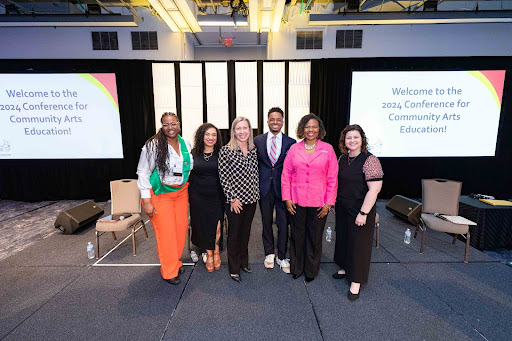
 

Photographed from left to right: Quanice FLoyd, Erika Hawthorne, Sarah Lyding, Tarik Ward, Rep. Lavon Bracy Davis, Michelle Hoffmann. Photo credit: Dr. Ceylon Mitchell II, M3 | Mitchell Media & Marketing, LLC 


Stay in touch with the panelists: 

National Guild for Community Arts Education Announces Awards Ceremony at 2024 Conference for Community Arts Education

Washington, DC — March 27, 2024 — The National Guild for Community Arts Education is thrilled to announce the recipients of its esteemed awards, to be presented during the upcoming Conference for Community Arts Education from April 9-12, 2024, in Washington, DC. This year's conference theme, "Seeding Fractals: Cultivating Connections, Multiplying Impact," underscores the importance of fostering connections and amplifying the transformative power of community arts education.

The awards and their distinguished honorees are as follows: 

The Duffie Adelson Award for Lifelong Achievement in Community Arts Education 

Honorees: Madaha Kinsey-Lamb and Paul Babcock

Madaha Kinsey-Lamb: A tireless advocate for arts education and community development, Madaha Kinsey-Lamb has dedicated over five decades to empowering individuals of all ages through creative expression. From her pioneering work as the Executive Director and Founder of Mind-Builders Creative Arts Center in the Northeast Bronx to her commitment to amplifying the voices of Black youth and communities of color, Madaha's impact is immeasurable.

Paul Babcock: As President/Chief Operating Officer of the MacPhail Center for Music, Paul Babcock has played a pivotal role in shaping the landscape of community arts education. His visionary leadership has led to significant advancements in music education, expanding access and enriching the lives of thousands of students across the nation.

The Sandra Bowie Award for Social Change

Honoree: Mariah Rankine-Landers

Mariah Rankine-Landers: An interdisciplinary artist and educator, Mariah Rankine-Landers uses her art as a catalyst for social change. Through her innovative curriculum design and dedication to equity in education, Mariah has empowered students and educators alike to challenge master narratives and build a more just and compassionate society.

The Congresswoman Alma Adams Advocacy Award

Honoree: Florida State Rep LaVon Bracy Davis

LaVon Bracy Davis: A trailblazer in the intersection of arts, education, and public service, LaVon Bracy Davis has championed legislative initiatives to support the arts and advance social justice. Her unwavering commitment to criminal justice reform, education advocacy, and community empowerment exemplifies the transformative potential of arts advocacy in the public sphere.

The Next Generation Award

Honorees: Qiaira Riley and Kerry Warren

Qiaira Riley: An interdisciplinary artist and cultural worker, Qiaira Riley is dedicated to uplifting Black women and femmes through her creative endeavors. Her innovative approach to arts education and community engagement has inspired new generations of leaders and fostered social change.

Kerry Warren: With a passion for holistic healing through the arts, Kerry Warren brings mindfulness and creativity to her work as a Teaching Artist and movement instructor. Her commitment to trauma-informed practices and inclusive education is reshaping the landscape of arts education for future generations.

These remarkable individuals embody the spirit of creativity, innovation, and community engagement that lies at the heart of the National Guild for Community Arts Education's mission. Their contributions have left an indelible mark on the field of community arts education, inspiring us all to cultivate connections and multiply impact.

The awards ceremony will take place during the 2024 Conference for Community Arts Education, where honorees will be celebrated for their achievements and dedication to advancing the field. For more information about the conference and the National Guild for Community Arts Education, please visit www.nationalguild.org/conference

Contact: 
Quanice Floyd
Executive Director
quanicefloyd@nationalguild.org

###

National Community Arts Education Day to be Recognized Nationwide

New York, NY – The National Guild for Community Arts Education is proud to announce a groundbreaking milestone in our advocacy efforts for arts education across the nation. Through close collaboration with Representative Nydia Velazquez's office, we have successfully crafted a national resolution recognizing February 28th as National Community Arts Education Day. This resolution will be formally introduced in Congress on February 28th, 2024.

National Community Arts Education Day aims to celebrate and highlight the invaluable contributions of community-based arts education programs in fostering creativity, nurturing talent, and building vibrant communities nationwide. This designation is a testament to the tireless dedication of educators, administrators, artists, and advocates who work tirelessly to ensure that arts education is accessible and inclusive for all.

The journey to achieving this milestone has been one of partnership, perseverance, and passion. The National Guild for Community Arts Education extends its heartfelt gratitude to Representative Nydia Velazquez for her unwavering support and leadership in championing this cause. Her commitment to the arts and education has been instrumental in driving this initiative forward.

As we look ahead to February 28th, 2024, the National Guild for Community Arts Education calls on communities, organizations, and individuals across the nation to join us in celebrating National Community Arts Education Day. Let us come together to honor the transformative impact of arts education and reaffirm our commitment to ensuring that every individual has access to the enriching benefits of the arts.


For more information on National Community Arts Education Day and the National Guild for Community Arts Education's advocacy efforts, please visit www.nationalguild.org or contact Tera Proby, Director of Advocacy at teraproby@nationalguild.org.


**About the National Guild for Community Arts Education:**

The National Guild for Community Arts Education is a national association of organizations, educators, and artists dedicated to ensuring all people have opportunities to maximize their creative potential. Through advocacy, professional development, and resources, the Guild supports and advances the field of community arts education.


Endorse This Resolution


Contact:

Tera Proby

Director of Advocacy

National Guild for Community Arts Education

teraproby@nationalguild.org

The Bipartisan Creative Workforce Investment Act is Introduced in the House and the Senate

On January 10, the Creative Workforce Investment Act, a bipartisan legislation aimed at empowering the creative workforce and providing greater access to the arts, was introduced in the House by Congresswoman Teresa Leger Fernández (D-NM), Congressman Jay Obernolte (R-CA), and Congressman Ted Lieu (D-CA) with its companion bill introduced in the Senate by Senator Ben Ray Luján (D-NM).

The National Guild for Community Arts Education's Executive Director, Quanice Floyd, lent her support of the bill stating, “This legislation provides necessary funding to arts and creative workforce programs to ensure that the arts and arts education is accessible to everyone. We are particularly proud of the Congresswoman and Senator’s support of community arts education by acknowledging the need for holistic experiences of arts education learning through in and out-of-school programming in the legislation. This bill reinforces the importance of arts and arts education and provides a pathway to such a critical investment in the country. We are thankful for the Congresswoman and Senator’s support of the arts and arts education in this bill.”

“In New Mexico, we know that our creative economy — the people who make the beautiful art we get to enjoy — have the power to move us all while creating good-paying jobs and growing our economy,” said Congresswoman Leger Fernández. “We often overlook this economic engine and don’t invest publicly in this important industry the same way we do in agriculture or manufacturing. This bill would change that, it will create a new, competitive grant program so every community in America has the chance to capitalize on the transformative power of art, so artists have the backing they need to create innovative public art, and so our creative economy can continue to grow and thrive.”

"Background:

Key provisions of the Creative Workforce Investment Act include:

  • National Grants for Arts and Creative Workforce Programs: Establishes a grants program to support arts and creative workforce initiatives that create publicly accessible art while employing individuals in the local community.
  • Uses of Funds: Specifies a range of programs eligible for funding, including concerts, storytelling initiatives, murals, films, theatrical productions, and support for arts in educational and community spaces, among others.
  • Reporting Requirements: Mandates annual reporting to Congress on grant outcomes, employment duration, earnings, and employment status of individuals involved in the programs.
  • Authorization of Appropriations: Authorizes $300 million in appropriations for fiscal years 2024 through 2026 to support the program."

Read the entire press release here

National Guild for Community Arts Education Announces New Awards for the 2024 Conference

FOR IMMEDIATE RELEASE

New York, New York — The National Guild for Community Arts Education is proud to announce the launch of its prestigious awards program for the upcoming 2024 Conference for Community Arts Education. These awards recognize outstanding individuals and organizations for their exceptional contributions to the field of community arts education. The awards aim to celebrate excellence, inspire innovation, and promote equity and justice in the arts.


Duffie Adelson Award for Lifelong Achievement in Community Arts Education

Named after Trustee Duffie Adelson, the namesake Award honors individuals who have dedicated a minimum of 20 years to the field of community arts education. Recipients are esteemed for their unwavering commitment and significant impact on the sector. Learn more


Sandra Bowie Award for Social Change

Named after Trustee Sandra Bowie, the namesake Award recognizes champions of equity and justice in arts education. It acknowledges individuals who have made a substantial impact fighting for BIPOC communities through their work in the arts. Learn more


Congresswoman Alma Adams Advocacy Award

The Congresswoman Alma Adams Advocacy Award is dedicated to honoring a legislator or policymaker who has demonstrated exceptional support for the arts and arts education. Their legislative actions and advocacy efforts have made a profound difference in promoting the arts. The recipient will be announced soon. Learn more


Next Generation Award

The Next Generation Award celebrates emerging leaders in community arts education, including students and professionals in entry-level to mid-level positions. Individuals will be recognized for their innovative contributions and potential to shape the future of community arts education.

Learn more


These awards showcase the National Guild's commitment to recognizing leaders, promoting equity, and advancing the field of community arts education. The recipients will be celebrated during the 2024 Conference for Community Arts Education, taking place from April 9-12, 2024 in Washington, DC.


"The National Guild is proud to honor these exceptional individuals through their namesake awards for their dedication to community arts education," said Quanice G. Floyd, Executive Director. "These awards reflect our organization's core values and commitment to fostering a vibrant and inclusive arts education community."


Nominations for the awards are now open, and the National Guild encourages individuals to submit nominations for deserving candidates. Detailed eligibility criteria and nomination forms are available on the National Guild's website here.


For more information about the 2024 Conference for Community Arts Education Conference, please visit this link.


About the National Guild for Community Arts Education

The National Guild for Community Arts Education is a national network of arts education organizations and practitioners. With a mission to ensure all people have opportunities to maximize their creative potential, the National Guild promotes excellence in and access to lifelong learning opportunities in the arts.


2023 DMV Town Halls Reflection

The National Guild for Community Arts Education is committed to facilitating conversations that drive the evolution of arts learning. This Fall, we had the pleasure of deepening our connection with community arts educators and leaders through a series of Town Halls held in Washington DC, Richmond, and Baltimore. Guided by the Guild's Executive Director, Quanice Floyd, these meetings were a true embodiment of our commitment to listening and engaging with the voices of those at the forefront of arts education.

These Town Halls were not only meetings but vibrant hubs of discussion, with participants contributing their insights and experiences. It was through these robust exchanges that we were able to grasp the intricacies of needs from both current and potential Guild members. Now, let's delve into the substance of those conversations and reflect on the emerging themes that are steering the Guild’s path forward.

Town Hall Insights: A Tapestry of Community Voices

Participants at each location brought a myriad of topics to the table, emphasizing the diversity of our community’s interests and concerns. The conversations spanned a range of subjects crucial to the fabric of arts education:

  • Arts and Community Engagement: We discussed the transformative role of the arts in community building and the power of arts educators to guide students in becoming active participants in their local and global communities through their art.
  • Funding and Grants: Conversations often circled back to the challenge of securing funding, with many seeking guidance on the grant writing process and sharing innovative models for supporting arts education.
  • Advocacy for Arts Education: The group exchanged strategies for advocating arts education at various levels, recognizing the need to communicate its value more widely.
  • Diversity, Equity, Inclusion, and Accessibility: Ensuring that arts programs are inclusive and representative remains a recurring concern, with discussions on addressing systemic barriers in the arts education sector.

In-Depth Exploration of Community Needs

Our discussions were not just about sharing ideas but also about shedding light on the hurdles faced by the community arts education sector:

  • Funding and Resources: A commonly voiced challenge was the scarcity and inaccessibility of funding, as well as the restrictive nature of funding cycles.
  • Program Constraints: Many noted the need to navigate constraints in program delivery, often having to reframe arts education to align with funding opportunities.
  • Staffing and Compensation: Conversations revealed that issues of compensation, recruitment, and understaffing are widespread and need urgent attention.
  • Accessibility & Collaboration: There was a strong call for improved access to resources and advocacy tools, and the desire for collaboration across all demographics.

As we process the wealth of feedback from these Town Halls, we are reminded of the power that collective insights hold in shaping our mission. The energy, challenges, and aspirations shared by participants will directly inform our future initiatives and support structures.

Your engagement is crucial. Here's how you can make a tangible difference:

Become a Member: Join us today and be part of a growing voice that advocates for the essential role of the arts in education. Join Now

Save the Date: Mark your calendar for the 2024 National Conference, which will be held April 9-12 2024 in Washington, DC. Anticipate a gathering filled with opportunities for professional growth, networking, and community building. Save the Date

We graciously and humbly thank all who took the time to be in community with us and their community arts education community! Let's not just continue the conversation but deepen it, inspire change, and prepare for a conference that will be our most interactive and impactful yet. We eagerly await the opportunity to welcome you into our Guild community. Together, we will shape a vibrant future for community arts education.

Huge thanks to all of our partners and vendors who supported our Town Halls:

DC – DC Arts and Humanities Education CollaborativeDC Commission on the Arts and Humanities, Nourrir Cuisine

Richmond – Lily Black, RVA Cheese Girl

Baltimore – The Cube, Xquisite Catering

Photographer – Ceylon Mitchell

Love and Roses to Ariel Davis who organized these Town Halls and helped our small team do big things!

Congresswoman Alma Adams Introduces the HBCU Arts Act

On October 6, 2023, Congresswoman Alma Adams introduced the HBCU Arts Act, emphasizing the importance of arts education and the role of Historically Black Colleges and Universities (HBCUs) in nurturing African American artists in the United States. This legislation aims to enhance investment in HBCU arts education and provide students of color with affordable access to arts and culture programs, with a focus on preserving, studying, and displaying works by Black artists.

The HBCU Arts Act:

  1. Offers financial and other assistance to students in arts, arts education, and cultural programs.
  2. Establishes outreach programs and development offices for art, arts education, and cultural arts departments.
  3. Provides comprehensive support services for arts students, including faculty and peer mentorship, work-based learning opportunities, guidance counseling, and career advising.
  4. Focuses on exhibiting, maintaining, monitoring, and protecting Black art collections in exhibition and storage.
  5. Creates well-paid apprenticeships, internships, and fellowships through partnerships with nonprofit arts and cultural institutes.

The National Guild for Community Arts Education is proudly one of the supporters of this bill which also include NAfME, Feierabend Association for Music Education, and Americans for the Arts

Quanice G. Floyd, Executive Director of the National Guild for Community Arts Education, emphasizes the enduring significance of HBCUs in the arts community by stating, “HBCUs continue to serve and produce some of our country's most talented Black artists, educators, and cultural specialists. Further, our country's HBCUs continue to provide invaluable education to students of various socio-economic and ethnic backgrounds. In turn, HBCUs create a vital pipeline for a more diverse arts industry."

You can read the full press release here:

https://adams.house.gov/media-center/press-releases/congresswoman-alma-adams-introduces-hbcu-arts-act

National Guild for Community Arts Education Announces Series of Town Halls in October

New York, NY – The National Guild for Community Arts Education is thrilled to announce a series of Town Hall events across three key cities in the upcoming month. These meetings will serve as platforms to spark excitement for the upcoming conference, connect with local arts organizations and leaders, discuss Guild membership and support, and foster deeper city connections. 

The agenda will include remarks by Guild leadership and local partners, presentation on the state of community arts education and the Guild’s current work, structured networking, discussion and brainstorming and a preview of what to expect from the upcoming 2024 Conference for Community Arts Education.

Washington, DC Town Hall
Location: DCCAH
Date/Time: October 25, 2023, 5-7pm
In collaboration with DC Collaborative

Richmond, VA Town Hall
Location: Lily Black
Date/Time: October 12, 2023, 5-7pm

Baltimore, MD Town Hall
Location: The Cube
Date/Time: Oct 19, 2023, 5-7pm

Members of the media are invited to attend, cover, and engage with community members, leaders, and educators during these events. For further details, registration, or media inquiries, please contact: Quanice G. Floyd at quanicefloyd@nationalguild.org

About the National Guild for Community Arts Education

The National Guild for Community Arts Education is a national network of arts education organizations and practitioners. With a mission to ensure all people have opportunities to maximize their creative potential, the National Guild promotes excellence in and access to lifelong learning opportunities in the arts.

Announcing 2024 Conference for Community Arts Education Theme

New York, NY – The National Guild for Community Arts Education is thrilled to announce the theme for its highly anticipated 2024 Conference: "Seeding Fractals: Cultivating Connections, Multiplying Impact." This dynamic event will take place in the vibrant city of Washington, D.C., from April 9 to April 12, 2024.

Seeding Fractals: Cultivating Connections, Multiplying Impact

Inspired by adrienne marie brown’s Emergent Strategy, the theme for the 2024 Conference captures the essence of community arts education: the power of interconnectedness and the exponential potential for positive change. In nature, fractals represent intricate patterns that repeat themselves on various scales, from the smallest leaf to the grandest tree. Similarly, the community arts education sector thrives on fostering connections and relationships that lead to multiplied impact.

Learn more about our theme and our 2024 Conference in our new press release!

Organizational Retreat in Chicago

June 28, 2023

From May 31 to June 2, Guild staff and board visited Chicago for a three-day organizational retreat (we also held a Community Space gathering with Chicago community arts education practitioners—read about that here).
 

Seven people standing in a half-circle, most of which are on the stage of a school auditorium.         A library with bookshelves lining the walls, and the floor covered in large string instruments in cases.

On our first day, we were thrilled to be hosted by Merit School of Music—a longtime Guild member organization, where Guild trustee and former board chair Duffie Adelson was President for many years (and is now a Life Trustee). We were fortunate to get a tour of the building from Duffie. 

One highlight of the tour was the library which, in addition to books, includes musical instruments and even formal concert attire available for students to borrow.
 

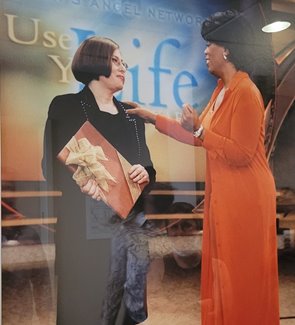
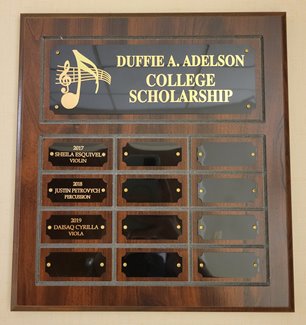
Duffie Adelson on stage at the Oprah Winfrey show, with Oprah facing her with her hand on her shoulder.        A plaque that reads "Duffie A. Adelson College Scholarship" with an image of music notes, and the names of scholarship recipients listed at the bottom.

It was beautiful to see evidence of Duffie’s legacy as we walked around the building, including a photo of Duffie on the Oprah Winfrey show talking about Merit’s work, and a plaque listing recipients of a scholarship in Duffie’s name.
 

During that first day we made significant strides in our strategic planning process with consultants Heather Heslup and Allegra Brown. They got the creative juices flowing by starting us off with a collective artmaking activity.


A large piece of brown paper taped on the wall, with vibrant abstract shapes in colorful paint.

Our masterpiece!

During this in-person session, we focused on Strategic Directions, which included setting SMART goals, creating measurable outcomes to support those goals, and deciding which goals will be prioritized in the timeline of the next few years. This set us up for the final step of the process, which is action planning.


Strategic planning consultants Heather and Allegra seated at the front of the room, while Guild staff and board members sit and stand around tables in a "U" formation.

The Guild has undergone deep transformation over the past couple of decades, and the Portal has provided us with an even deeper opportunity to reimagine this 85+ year old organization and our position in the community arts education field. We have now reached a stage in this process where the shape of the Guild’s future is more concrete, and there’s a lot of energy and excitement around what has emerged! Thank you to all who have provided input during this process, and we can’t wait to share the new strategic plan with you this fall.
 

A circular tapestry with a mandala print on it. Blue and bright yellow post-it notes with words on them have been arranged around the edge of the circle.

On our second day, we met at the National Museum of Mexican Art. We had a restorative circle facilitated by Jainelle Robinson, where we talked about some of the challenges and conflicts that have come up as part of this transformative organizational process. We began with an activity where we each wrote down the values that are most important to us in this work, and then added them to a circle in the middle of the room so that we could collectively ground in our shared values.

The retreat concluded with staff presentations, board committee reports, and board discussions about how they can support all of the work that’s happening now and moving forward.

Thank you to Duffie Adelson for being our local trustee and point person, and Merit School of Music and the National Museum of Mexican Art for hosting us!