Access Resource
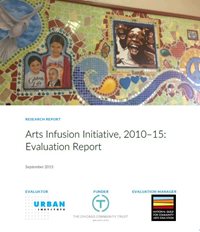 In 2010, the Arts Infusion Initiative, a model for social change that aimed to connect detained youth and those at risk for incarceration to rigorous and engaging arts instruction, was launched with the support of the Chicago Community Trust. The 2015 evaluation report examines the extent to which the program met its stated goals, and finds that, in general, the model created significant, positive developments for young people involved.
Access Resource
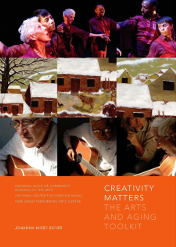 The arts are of vital importance to the lives of current and future generations of older adults. Creativity Matters is designed to increase the expertise of those who direct existing community arts and aging programs and to give others in the community the tools to take the first step—and keep going.
Access Resource
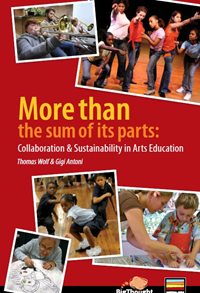 Some of the most promising solutions are generated by those willing to work differently by working together. Partnership enables organizations to make the most of each other’s strengths and thereby better serve their constituencies. More Than the Sum of Its Parts: Collaboration and Sustainability in Arts Education compiles inspiring examples of thriving partnerships whose creative strategies not only multiply the benefits of arts education but also help sustain their own work for years to come.
Access Resource
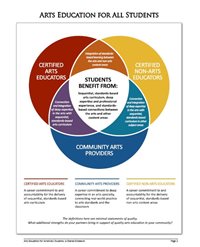 A 2014 document that articulates the purpose and value of arts education in a balanced curriculum for all students, asserting its place as a core academic subject area, and detailing how sequential arts learning can be supported by rigorous national standards and assessments. It was released alongside twelve other arts and educational advocacy organizations, including Americans for the Arts.
Access Resource
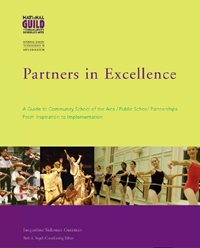 The National Guild's Partners in Excellence Initative researched and documented best practices in partnership between community arts educators and K-12 schools. This handbook is intended to help leaders in both community arts schools and public schools understand what partnerships are, what benefits they offer, and how to structure and manage them.
Access Resource
 In 2000, the National Guild began the Partners in Excellence (PIE) program to support community arts education partnerships with public schools. Building on that experience, this report highlights three case studies of arts organizations—Abrons Arts Center, Fleisher Art Memorial, and MacPhail Center for Music—implemetning exemplary K-12 partnerships.
Access Resource
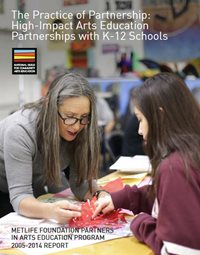
Between 2005 and 2014, the MetLife Foundation Partners in Arts Education (PIAE) program documented and disseminated effective practices, and provided grants, training, and technical assistance to advance partnership practice across the community arts education field. This report details elements that contributed to successful programs. It can be used by arts organizations, schools, funders, and advocates to create a more conducive environemnt for strong partnership.
Access Resource
As a follow-up to Dr. Shawn Ginwright's popular keynote address at the Guild’s 2015 Conference, the Guild hosted a virtual book club with members in January 2016 to discuss Ginwright’s book Hope and Healing in Urban Education. Facilitated by then Guild’s director of membership development and engagement, Robyne Walker Murphy, and featuring Dr. Ginwright, the book club continued the conversation on structural violence in urban communities and the role of arts education in addressing trauma. Rodney Lopez, one of our Hope and Healing book club participants and then global program director of Dancing Classrooms (New York, NY), followed up on the discussion by sharing some concrete strategies that his organization employed to achieve healing and progress amongst the Dancing Classrooms staff.
Influenced by Peter Block's book called "Community: The Structure of Belonging" Rodney believes creating a transparent environment that welcomes dissent, conversation, accountability and action fosters trust amongst staff. Striking the right balance between open and accountable communication requires risk from leadership.
"Conversations happen at the water cooler and over lunch. People mentally check out of staff meetings that go over the same old stuff. When you can nurture a culture of bold expression, people's batteries are recharged and you'll find new and creative ways to serve your communities."