Board of Trustees Post: Our Story

December 16, 2022

Earlier this year, the Guild entered a process that we called the Portal of transformation. The purpose of this process is threefold: to become more fully aligned with our racial equity principles, policies and values; to continue our historic service and advocacy work while imagining an inclusive organization which reflects the nation’s broad and diverse community arts sector; and to strategically position the Guild for relevance and resiliency into the future.   Transformation or revisioning requires curiosity, a deep commitment to the field of community arts education that we serve, and the willingness to think within a renewal mindset and make bold changes. As Albert Einstein once said, “You cannot solve a problem from the same level of consciousness that created it.” We, the trustees of the National Guild for Community Arts Education, the only national organization dedicated to the growth and sustenance of Community Arts Education, in fulfilling the Guild’s mission and our responsibility to communicate with our members and the field at large, are pleased to share our first transmission about the Guild's re-imagining process and some reasons why this transformation is crucial to the the goals and vision of the organization. 

A number of messages have been transmitted from the organization. We are in the process of realizing a communications strategy to ensure that all transmissions to you are transparent and fully crystallized within the National Guild’s mission and values as we move into a strategic plan and a new, inclusive era of service and advocacy to Community Arts Education in all of its forms and functions.

The appointment of our current Executive Director, Quanice Floyd has been pivotal to this process. Quanice Floyd, a dynamic, enthusiastic and prophetic leader has demonstrated the capacity, imagination and experience to guide us toward the emergent vision of equity, community, leadership and creativity that is foundational for a transformed National Guild for Community Arts Education. We present to you the Guild’s key transformational message in the inspiring words of the Executive Director: “The Guild’s work over the past 85 years has helped us build a strong foundation to support community arts education leaders around the country. After these past two years, we realized that we are on the right track with the “why” but now is the time to expand the “how” we do our work so that we can best adapt to the needs of our community. The only way we can accomplish this is by working collectively together and by seeing humanity in one another. Together, we can strengthen the community arts education ecosystem so that our communities can thrive by removing barriers. We must use our creativity to better not only the community arts education field, but the entire world. The time to do this is now.”

Our 85 years of organizational service and advocacy began in 1937 as the National Guild of Community Music Schools. In 2009 we changed our name to the National Guild for Community Arts Education, to reflect a more inclusive vision of community arts beyond the “music school-based” model, and in 2017 we articulated a new mission—“To ensure all people have opportunities to maximize their creative potential by developing leaders, strengthening organizations, and advocating for community arts education.”

These changes have allowed the Guild to grow from less than 20 member organizations during the first few decades, to over 300 members throughout the U.S. As the Guild expands to include all arts disciplines, populations and types of community organizations, we recognize that to fully realize our mission we need to grow and transition in a manner that is more inclusive, and serves and uplifts communities and organizations which have been historically excluded.  

2015 was a primary turning point in the Guild's history as we embarked on a journey towards a culturally and racially equitable vision. At this time, the values of Equity, Community, Leadership and Creativity were named, and guided the formation of a Board Committee to ensure that our  core values were actualized within the policies, procedures, programming, processes, and actions of the National Guild for Community Arts Education. 

In 2020, the Guild’s Board of Trustees unanimously approved our Racial Equity Guiding Principles and Policies as an addendum to the Guild’s by-laws. In so doing, the Board created a mandate that we consciously shift our focus to include and prioritize communities who have been most impacted by inequity and injustice. 

To midwife a transformation of this magnitude is challenging, since Equity was not a foundational building block for the Guild. Given the dearth of working equity models in the arts (or any organizational sector), the Guild is charged with envisioning and modeling cultural and racial Equity as a reality within the community arts education sector. We seek to shape structures and policies that promote an organizational culture where our energies and efforts are engaged to create an equitable context and climate for everyone we serve. 
 

A New Collective Story 

Our quest is to meet the moment for the nation-wide equitable expansion of community arts education within one of the most racially and culturally challenging times in our country’s history. As the only community arts education organization serving this nation, we seek to expand membership from the center outward, and intentionally serve the people, organizations, and communities that have been excluded from access to the Guild’s programs and services since inception. Member organizations and others, organizations rooted in BIPOC neighborhoods, and teaching artists have shared with us that they need culturally relevant programming, an inclusive membership structure, and full community input and participation to support belonging. Our commitment is to address and remove these barriers, as well as others, as we work with you to create and implement our strategic plan. The Guild intends to take part in the creation of an ecosystem where equity, community, leadership and creativity function dynamically as our collective North Star.

As we bring forth the promise of a new and inclusive National Guild for Community Arts Education, within the community that we continue to serve, intentionally giving priority to racial equity through active inclusion, our work has stirred doubt and anger among some current and former Guild members. For the new story of the Guild to become a reality, we need a shared commitment to working towards a better, more equitable, and more abundant future. 

Our goal and quest is to hear you, inspire you and work with you to build a stronger, more relevant, inclusive and equitable National Guild. Our key organizational messages, highlighting the vision of our Executive Director as well as organizational messages from the Board and Staff will be consistently provided to you, outlining our goals at this juncture and throughout the strategic planning process. We will ensure that our messages to you are clear, transparent, and that they present opportunities to solicit your input, thoughts and ideas as we move forward. One way you can share ideas and questions is by submitting them anonymously using this form

As we move into a strategic planning process, we are thinking big and dreaming about new and inspiring ways to achieve our mission. However, there are some things that will always remain true.  

  • We will always act as a welcoming hub for community arts organizations and artists to convene, learn, and seek support through events, publications, and our website.  

  • We will always advocate on behalf of our field and engage with stakeholders to ensure Community Arts education is valued and resourced.  

  • We will always prioritize leadership development as a critical component of building our field. 

  • We will always be a place for a wide variety of artistic mediums, communities and approaches to Community Arts Education to come together as one field.  

  • We will always be committed to making sure that Community Arts programs are understood as a lifelong right for people of all ages.            

The changes we seek in our organization are rooted in the way we will listen, center and design our programs and services to ensure that those who have been excluded are no longer, and that we will institutionalize and actualize policies, processes and practices in our organization that align with our commitment to equity, power redistribution and restoration. We seek concrete approaches to ensure these commitments are not simply words but result in real action and new ways of doing things.

We, the Guild Board of Trustees and staff commit to showing up consistently, clearly, and creatively within this process. We, the Board of Trustees are a committed group of arts and culture professionals who have dedicated our lives to this field. We deeply honor and value the work of community arts education in all of its forms, for we know that the arts within a social justice framework are key to the success for all of our communities, our children, and our futures. 

Recap: Liberatory Hiring Portal Cafe

December 14, 2022

On November 30th, we held our first Portal Cafe with Guild staff member Ashley Hare, based on their post about liberatory hiring practices. Portal Cafes are virtual opportunities to have a deeper discussion about the learnings and practices that the Guild is developing in the Portal, and attendees are encouraged to bring their own thoughts, questions, and learnings related to the topic.

We used an artful practice to surface things we were wondering or confused about, fears, and hopes related to hiring—and there were many! Some key points and tips that were shared by the collective during the conversation:

  • Ensure that your organization is ready to hire. Sort out compensation, the employee handbook, employee agreements, onboarding processes, etc. before starting the hiring process. Allocate time and resources towards onboarding.

  • Create a realistic and fair position description. Be mindful of how much capacity the position requires, and set the compensation accordingly. Build in room for the person to breathe, vision, and dream. Instead of creating a giant laundry list of things the person will need to be amazing at, lean into a few things they need to be really great at—and a few other things that they need to understand or appreciate in order to work with the team.

  • Make the application clear and simple. Try asking candidates to submit an answer to one question instead of requiring a cover letter, and allowing an option to answer through video. Be clear about compensation in your application.

  • Pay people for their time. Especially if you’re requiring candidates to participate in many rounds of interviews, compensate them for their time to ensure that this isn’t a barrier for your candidates.

  • Build a reciprocal relationship with candidates. Stay in touch with candidates who were not selected, and offer them support in their job search or funds for professional development if you can. Connect them with people in the field who you have relationships with. Keep them in mind for other kinds of opportunities.

  • Set employees up for success. When speaking to references, ask them about what kind of support would make the candidate really successful in a position. Make sure there’s a plan in place to support the new hire in succeeding.

Thank you to all who participated! Together, we can make the practices at our community arts education organizations stronger and more equitable, and make sure community arts educators are being cared for in the way they deserve. Stay tuned for more Portal Cafes on more topics in 2023.

Heather Heslup & Allegra Mercedes Brown selected as Guild strategic planning consultants

November 30, 2022

The Guild is pleased to announce that we’ve contracted Heather Heslup of Pure Art Solutions and Allegra Mercedes Brown of Leadership Development & Learning Design LLC as our strategic planning consultants! Heather and Allegra are Arts/Education Management & Social Justice professionals who specialize in tapping into the creativity of a collective to strategize optimal futures. They have supported various organizations and educational institutions to reach their strategic goals, including the Los Angeles Department of Arts & Culture Arts Ed Collective Program, Arts for Healing & Justice Network, artworxLA, and Turnaround Arts: California.

Heather and Allegra take clients through a strategic planning process that centers humanity, collaboration, and equity. We found alignment with their collaborative process, their racial equity lens, and their commitment to facilitating the dreaming and imagining required to challenge the status quo.

As part of our Portal of transformation, we are embarking on this strategic revisioning through a lens of cultural and racial equity—to be completed in summer 2023. As the sole national service organization existing to support community arts education, we find ourselves at a unique and exciting time which calls for deep and generative listening and dialogue with our constituents and field; thorough examination of our organization internally and externally; and bold dreaming and reimagining to create a fresh new vision that is deeply rooted in our values and our racial equity principles and policies.

Stay tuned! We will invite community in various ways (including more in-person and virtual Community Spaces in the new year) to give input about what you’d like to see and how we can best support you. The feedback gathered will be incorporated into the strategic plan, as well as shared back with community.

Recap: San Francisco & Oakland Community Spaces

November 16, 2022

A group of people standing in a circle, with their hands stretched out in front of them

Guild trustee Nancy Ng smiling and talking at a microphone, with a slide projected in the background that says Community Spaces Bay Area - welcome to the Museum of the African Diaspora  Four people sitting in a circle in conversation with each other - three are sitting on the floor and one is seated on a bench. One person is speaking and gesturing.

San Francisco Community Space at The Museum of the African Diaspora

Last week we held two wonderful Community Spaces in the Bay Area—one in San Francisco (at The Museum of the African Diaspora) and one in Oakland (at Oakstop). Guild trustees Nancy Ng and Sofia Fojas graciously hosted us. 

Some themes that emerged in conversation were the devastating impacts of gentrification and the artist exodus from the Bay Area; the importance of accessibility; the need for policy to support community arts education; the constant struggle to prove the importance and magic of this work in order to get funding, living wages for teaching artists and staff; connections to other types of community services; and much more! Attendees also raised the question of how the Guild can help disrupt the oppressive systems we're all functioning in, especially considering all that the pandemic has exposed. 

Thank you to Pro Bono ASL for providing ASL interpretation, Erica Mones for the delicious food, and photographer Jordan Lewis for capturing the Oakland event.

A person with short black and green hair with two thin braids that hang longer than the rest, standing with their back to the camera and looking at a flipchart paper that says "Thinking about the Guild - what services would be most beneficial to YOU as an individual?"

People sitting around several circular tables, with artwork on the walls in the background  Guild staff member Ivy Young standing and speaking into a microphone, with a screen displaying a slide in the background

Oakland Community Space at Oakstop. Photos by Jordan Lewis

Recap: Boston Community Space & Site Visits

November 4, 2022

Executive Director Quanice G. Floyd sits to the left of Board Trustee Lecolion Washington. Behind them is a board projecting a slide that includes the following text: “Community Spaces: Boston. Welcome to the Community Music Center of Boston. Wednesday, Oct. 19. 6pm-8pm.”

Attendees of the Boston Community Space are gathered in circles and seated, engaged in conversation. There is a large, colorful art piece on the wall, and Executive Director Quanice G. Floyd and trustee Lecolion Washington are standing on the right side of the room.Two event attendees - a person with light skin, black framed glasses, and short grey hair and a person with light brown skin and short dark hair - engaged in conversation 

Photos by Vanessa Leroy

On Wednesday, October 19, we held a Community Space in Boston, with Community Music Center of Boston and their Executive Director (and Guild trustee) Lecolion Washington as our host. We had a rich conversation about what community arts education looks like in the Boston area, what challenges folks are facing in their work, what programs and resources would be most beneficial to their organizations, and what inspires them.

Shout out to the staff at the Community Music Center of Boston for hosting us, Dudley Cafe for the yummy food, as well as photographer Vanessa Leroy for documenting the event.

While in Boston, Guild Executive Director Quanice G. Floyd also visited with South Shore ConservatoryWest End House Boys and Girls ClubHyde Square Task Force, and Concord Conservatory of Music. Thank you to Robert Cinnante, Nadine Martinez, Celina Miranda, and Karen Yoder for welcoming us into your spaces and sharing some of the opportunities and challenges you and your communities are experiencing! 

South Shore Conservatory President Robert Cinnante and Guild Executive Director Quanice G. Floyd pose with big smiles in front of a vertical South Shore Conservatory banner with a photo of young people singing.  Hand-painted sign with the text "Boston's Latin Quarter" and an illustration including a building, a train, and a bird in flight, seen at Hyde Square Task Force.

Bulletin board with colorful paper and text that reads "In this room you are an artist if you... want to make something abstract; want to chat and chill; listen to music and rest; want to learn a new skill; want to challenge yourself to create something large; want to (safely) play with materials; you're always welcome with no judgement", seen at West End House Boys and Girls ClubThe Concord Conservatory of Music building, sitting regally at the top of a small hill

Clockwise from top left: South Shore Conservatory; Hyde Square Task Force;
Concord Conservatory of Music; West End House Boys and Girls Club

Message from Quanice: October 2022

October 20, 2022

Over the past two years, we have experienced historical events that have given us opportunities to reflect on our humanity and who we are in this greater world. This has been a vital time for us as a field to really dissect our impact and how we approach our work. In May we announced that the Guild would be going into a Portal—the goals of which are to refine the internal and external structures of the Guild and to become more intentional about the work we are doing. 

We’ve accomplished a number of things already, including: retreats for board and staff; reviewing and revising internal policies and procedures, financial systems, and program evaluation; breaking down hierarchies of staffing; revising our hiring process; hiring a strategic planning consultant and an amazing new development strategist; building relationships with people in the field; learning and engaging in professional development; and planning engagement opportunities for the field in our upcoming fiscal year. Inevitably, the Guild will look different as we go through this process of transformation—and you will be our collaborators and partners in creating what that looks like. 

Over the next few months, we will be sharing the things we have been working on through these Transmissions from the Portal and our virtual Portal Cafes. Our new Community Space program will allow us to see the amazing work you all do on the ground, and help the Guild identify what resources, and programs we can adapt and/or create to support your work and have more of an impact across the field. We expect our new strategic plan to be completed in summer 2023. Keep an eye out for information about our 2023 programs as we approach the new year.

We are so excited and grateful to be on this journey with you! Looking forward to sharing and discussing more.
 

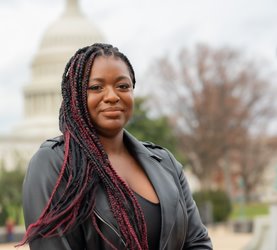
Portrait photo of Quanice G. Floyd. She is wearing a black jacket and has red and black braided hair. The Capitol building can be seen behind her.

Quanice G. Floyd
Executive Director

Staff Post: Ashley Hare – Liberatory Hiring Practices

October 19, 2022

If you prefer to listen, click here for a voice note version of this post.

Hi Guild Fam! I hope this update finds you hydrated, rested, and full of joy. Since our previous touch base last year, many things have been moving and shaking at the Guild. What an exciting time! Over the past year, I have learned so much about what it means to be an “Equity Officer”, a position many nonprofits are making on their journey to be anti-racist. This blog post will be accompanied with a virtual Portal Cafe where we can harvest stories together. Right now, I want to discuss new hiring practices we’ve been creating. There is sooooo much deep, intentional, human-centered work to be done when starting the process of bringing someone new into your organization. Starting a hiring process requires full focus and dedication. Here are a few of the new practices I have really fallen in love with…

Share the job description with staff first

Every staff member has needs and desires when adding a +1 to the team. All staff, yes even the operations person who may only work with the open position 3 to 4 times a year, need to see and give thought to the job description before posting. The Guild staff have contributed amazing thoughts during our past two hires. They are part of my community of practice, and provide multiple lenses in crafting policy and practice. Sharing with full transparency also allows conversations to arise that may have been causing tension, such as compensation inequities causing resentment, or overlapping role responsibilities causing confusion. If your current policy is to only include the Executive Director and Direct Supervisor, ask yourself why? More can be gained from creating collective excitement around a shared open position, than moving from fear of conflict. 

Make a timeline

One of the things we received positive feedback from applicants about during our most recent hiring process was including a detailed timeline and sticking to it. If we desire to move at the speed of relationship building, and not paternalism and urgency, then a timeline is a “must” tool for accountability. Having a timeline allowed me to see where we, at first, left no time to rest and breathe. We were able to rework until we felt air throughout the timeline process. Sharing the timeline as part of the job posting allowed applicants to feel their time was being valued, and gave them space to plan accordingly and also show up rested. Oh, and if your timeline is wildy long, you need to pay people for their time. That topic is its own blog post…

Include an all staff interview

This part is so vital. As an applicant, it always confused me why the final interview would be with just the Executive Director or the direct supervisor, but not the whole team. When a friend invites me to a cookout, I always ask “Who’s all gonna be there?” If we believe interviewing is a two-way street, then of course an applicant should see who’s all at the table. Having an interview where everyone is in the room is such a delightful experience, you really get to see and feel the group dynamic. I also recommend a debrief space with staff. Again, it’s helpful to have multiple lenses to catch things I might not have.

Reciprocate Energy

Ah, so vital again! In our last application for an open position, we asked for one question to be answered. No cover letter or letters of recommendation. Just a resume and answer to one question. Sounds simple, but it’s not. Reflecting and writing (or video/audio submissions) takes so much time! Because of this, I have to spend the same amount of time responding to each and every applicant. After each round, I went back to the original email and responded. I did not ghost anyone. I did not write one mass “No, thanks” email bcc’ing everyone. In my individual response emails, I did copy/paste some general sentences from a template, but I dedicated myself to including at least one sentence which shared some of the reasoning for our decision. I even used an emoji! Set a boundary with your colleagues to give yourself time on your calendar to be human and respond accordingly. We have all created breath and space when applying to a 70-page NEA grant. Do the same for people. 


Here are some of many responses to our new human-centered hiring practices: 

“Hi Ashley! Thanks for your note. I just wanted to let you know that this is the BEST ‘rejection letter’ I have ever received. Bravo. Between the thoughtfulness of this correspondence, to what I am guessing is all 140 applicants in addition to how awesome the organization sounds to work for based on the job description, I think your final candidate is one lucky person. I mean, I am sending you a thank you note for not giving me a job, lol. I just like to call out kindness and good work when I see it. Thanks again!”

“Thank You Ashley! Your response and feedback is much appreciated. It certainly provides helpful context of which I wish more organizations would model after during the hiring process. Best Wishes!”

“I greatly appreciate you letting me know! While I am saddened that I was not able to move forward with this, I was moved by your organization's commitment to transformation with the intention of being in true alignment with the values and mission y'all adhere to and I would love to keep in touch somehow. I genuinely wish that there were more organizations that would be willing to do the same, as I have seen organizations value themselves over the work to the point that they will sacrifice everything (from staff to community members) to not seriously change the organization to address desperately necessary internal work.”
 

These highlights in our new process are just the beginning. I am curious if any of you have thoughts on these, or other practices not mentioned? Some lingering questions are: How much and when do we compensate interviewees? When do we involve board members? Do we maintain relationships with final candidates? Where are we posting the job to ensure a diverse pool of candidates? 

I hope you join me at the upcoming Portal Cafe so we can continue this discussion!


Update: We had a wonderful Portal Cafe discussion based on this blog post on November 30, 2022! You can read some key points and tips shared by the collective about liberatory hiring practices in this recap.

Guild Receives $75,000 from The William and Flora Hewlett Foundation

October 6, 2022

The William and Flora Hewlett Foundation has awarded the Guild a grant of $75,000 over 1 year and 3 months for an Equity, Inclusion, and Diversity (EID) capacity building project. This grant will support our ongoing work of making concrete organizational shifts to become more deeply aligned with our values and racial equity principles.

The Foundation previously invested in the Guild’s racial equity work through the EID program in 2019. As part of that grant, Equity Literacy Institute (ELI) conducted a racial equity assessment of the Guild. ELI’s report included recommendations about how to shift racist policies and practices, as well as address gaps in perception of how much work was truly ahead in order to achieve racial equity. As a next step, we developed our Racial Equity Guiding Principles and Policies and our board approved them as an addendum to the Guild’s governing by-laws. 

Since welcoming our current Executive Director, Quanice G. Floyd, in January 2022, the Guild has prioritized taking action to address the recommendations included in the racial equity assessment and the feedback we’ve received from community arts educators in the field over the years. In this period of transformation, which we call “the Portal”, we are creating a new story and building a restorative culture of trust, transparency, liberation, and love. The goal of the Portal is to deeply examine Guild practices and programs through an anti-racist, anti-oppressive lens, and identify (1) what needs to shift in the Guild’s organizational culture to authentically foster racial equity and become more consistent with our racial equity principles; and (2) systems change work required to make an impact in the community arts education field. 

The current William and Flora Hewlett Foundation grant will support: building an equitable governance structure that allows for collective decision-making, transparency and accountability; developing healing practices for the workplace and integrating them into operations; professional development for staff to foster operational equity in the work; developing tools to support a work culture grounded in clear and respected boundaries, direct confrontation (which is one of our racial equity principles), and a clear understanding of how each approaches their work; and an in-depth analysis of current field needs and how the Guild is internally reflecting those needs.  

We are grateful to members of the philanthropic community who are actively supporting the crucial work of organizational transformation and racial equity. The Guild is fully committed to this work as we reimagine and redesign the Guild as an equity-embedded organization, and we recognize that continuing this work is critical not only for the Guild as an organization, but also for our members and the field at large.

Welcome to new staff member Naiya Speight-Leggett!

September 29, 2022

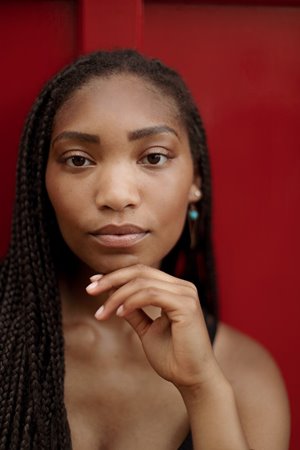
A warm-brown skinned femme in front of a vivid red background looks directly at the camera, hand resting against chin. Naiya has long dark brown box braids, a black top, and vibrant turquoise and copper earrings.We are thrilled to welcome Naiya Speight-Leggett on board as our new Development Strategist! Naiya Speight-Leggett (she/they) is a creative strategist, professional dancer, and visionary catalyst born and raised in ‘Washington, DC’—occupied Piscataway & Anacostan land. She is a lover of people, art, and equity who works in the radical tradition of Black Queer Feminism to inspire transformation that honors our inherent interconnectedness.
Naiya brings both robust proficiency and energizing ideas to their work with the Guild. Their experience spans: arts education; nonprofit, management, and DEI strategy consulting; community organizing; and social policy work—always centering people first. She co-facilitates MoneyPot, an anti-capitalist direct resource redistribution initiative for BIPOC abolitionist organizers. She has taught, performed, and created with various dance companies, The Kennedy Center, and U.S. + D.C. organizations. Naiya is launching their upcoming movement healing practice, prioritizing liberatory wellness and holistic joy.

Naiya earned her dual degree BA in Political Science & Black Diaspora Studies (Urban Studies concentration) from Yale University. She also has advanced training in business development. Naiya has received the Yale Creating & Performing Arts Award and National Society of Arts and Letters Award for Excellence in the Arts, among others.

Video update, board & staff retreats, plus the Guild is coming to you!

August 31, 2022

Hello from the Portal! We've been deep in our dreaming and reimagining work, while building new practices of rest, restoration, and care.

We'll be sending you Transmissions about what we're learning, unpacking, and creating in the Portal (if you don't already receive emails from us, sign up for our list here). In addition to general updates, staff and board will share about specific topics we're exploring—along with an invitation to join the conversation with us in a virtual "Portal Cafe".  

Hear this month's updates from staff in the video below:

{^youtubevideo|(width)425|(height)264|(fs)True|(rel)True|(url)https://www.youtube.com/watch?v=EGUuUcdX4dE|(autoplay)False^}

Video description: Executive Director Quanice G. Floyd, Deputy Director of Equity and Human Development Ashley Hare, and Membership and Operations Manager Rangsey Keo share Guild updates.

Board & Staff Retreats

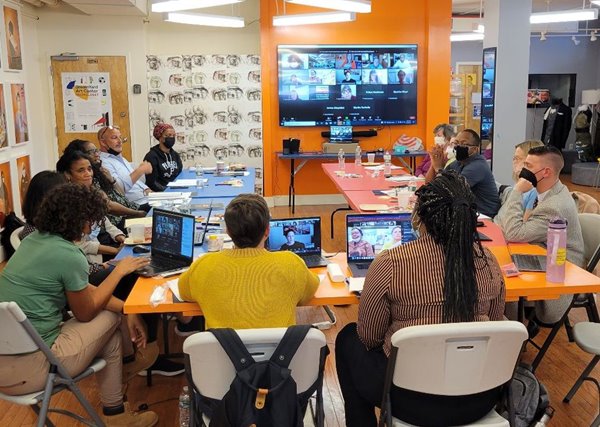
Board and staff gathered around tables in a colorful room, with a large screen on the wall with virtual participants' Zoom squares

Board retreat at DreamYard Project in the Bronx

In June we held a two-day board retreat in New York City (thank you to Dreamyard and Gibney Dance Center for hosting us). Trustees and staff from all over the country gathered in person and virtually to reimagine the work of Guild, tap into our creativity, and dig into our planning and projects for the Portal and beyond.
 

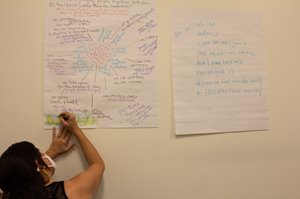
Rangsey stands in front of a large music-themed mural on the outside of the Atlanta Music Project building.    Ivy, wearing a mask, writes on one of two flipchart papers on a beige wall.

Staff retreat at Atlanta Music Project in Atlanta, GA

In July we held a staff retreat in Atlanta, GA. Thank you to Atlanta Music Project, who welcomed us into their space for three days! We began a deep examination of the feedback we've received from our community over the last few years, and discussed how the Guild can move in a more human-centered and heart-centered way, share power, co-create, and root ourselves in an abundance mindset. We're excited to continue this conversation with you.

The Guild is coming to you!

This fall, we will begin visiting communities across the country to build new relationships, deepen old ones, and learn about new possibilities for the Guild to support you. These in-person gatherings will be fun, informal, and allow space for collectively dreaming the future of community arts education.

We will be in Boston from October 18th–20th, and San Francisco from November 8th–10th. If you are in one of these areas, save the date! We'll also have a virtual gathering open to all who are unable to join in person.