Education Commission on the State Releases CYD Policy Brief

This policy brief, which received input from the National Guild and the Creative Youth Development National Partnership, provides an overview of CYD and its connections to student success, examples of successful programs and considerations for state policymakers. 

Creative Youth Development is a long-standing practice that fuels students’ potential by intentionally integrating creative skill-building, inquiry and expression with positive youth development principles. In CYD programs, young people create original work through arts experiences and apply their creative skills to solve problems. These programs may be particularly beneficial for underserved youth, providing them with opportunities to amplify inherent strengths and talents, build positive relationships, and express themselves in safe and healthy spaces. Increased flexibilities under the Every Student Succeeds Act (ESSA) offer states the opportunity to explore the use of innovative strategies to provide students with a well-rounded education that includes the arts. CYD strategies may serve to narrow the achievement gap and increase equity in education systems. Additionally, states may use CYD programs in conjunction with other educational initiatives, including those related to school improvement, alternative education, deeper learning, social-emotional learning and 21st century skills. Read the complete policy brief here.
Thaler-Johnson to Retire from Newark School of the Arts after 25 years

Newark School of the Arts today announced that Sherrie Thaler-Johnson, the school’s development director for 25 years, will retire from her position on August 31. Sherrie has been a vital part of the school’s legacy, and over her tenure helped to raise 70% of the School’s annual operating budget. This money was raised through corporate grants, foundation grants, government grants, individual giving and fundraising events. She has helped lead many fundraising events as well as two capital campaigns.

“It has been my pleasure to work with a wonderful board, staff and donors while serving the community in this capacity. To see young children enrolled at the school grow-up, develop their talents, go off to college and then come back to the school years later to enroll their own children, is most satisfying…”  -Sherrie Thaler-Johnson

Learn more about Newark School for the Arts.

Cathedral Arts Project Works Cross-Sector to Support Youth

Cathedral Arts Project (Jacksonville, FL) has recently announced a cross-sector partnership with the Youth Crisis Center (YCC) that allows YCC to reach youth populations with creative and artistic programming. Funded by the Jim Moran Foundation, the partnership is an example of the partnership opportunities advocated for by the Creative Youth Development National Partnership.

In what is being called one of the worst funding years for arts and culture by the state of Florida, the Youth Crisis Center (YCC) and Cathedral Arts Project (CAP) say funding from The Jim Moran Foundation has been more critical than ever for the youth both agencies serve. A partnership with CAP has provided visual arts classes for youth in the Residential Crisis Care Center at YCC to help with therapeutic self-expression. It is a vital part of the counseling and support services YCC offers to youth who have been exposed to traumatic situations such as divorce, homelessness, relocation, loss of life, bullying, abuse, and sex trafficking.

The Jim Moran Foundation has sponsored 28 weeks of classes in 2018 at YCC that teach art forms such as 3D and clay sculpture, word art and collage, among others. “We are thankful for the leadership that The Jim Moran Foundation has shown in funding education and the arts in our community. Through this grant, YCC’s partnership with the Cathedral Arts Project has restored visual arts classes for the children and teens YCC serves in our Residential Crisis Care program,” said Kim Sirdevan, president and CEO of YCC. “Although our youth are receiving these classes while in Residential Crisis Care, there are many others in our community who are not because of a lack of funding. We want our community to know that a lack of funding truly impacts so many young people, who for some, use the arts to help in their healing.”

Learn more and read the full story here.

Wallace Foundation Appoints New Director of Arts

Bahia Ramos has been selected as The Wallace Foundation’s new Director of Arts and will oversee one of the foundation’s key grantmaking areas. She will lead both the arts program unit and the interdisciplinary team responsible for the strategic design and implementation of Wallace’s initiatives in the arts.

“We are delighted to have Bahia Ramos joining our team at The Wallace Foundation,“ said Will Miller, President of The Wallace Foundation. “She brings a wealth of experience in philanthropy, the arts, and community engagement that, in combination with the experience and expertise of the other members of the arts interdisciplinary team, will help us work effectively with our grantees and shape our future initiatives in the arts and arts education.”

In its Building Audiences for Sustainability initiative, Wallace is working with 25 performing arts organizations to develop practical insights into how arts organizations can successfully expand their audiences in ways that also contribute to their long-term financial health. As field efforts in the initiative enter their final phase over the next year or so, Ramos will lead the development of the strategy for the next round of Wallace’s work in the arts.

Ramos will also lead Wallace’s work in arts education, which seeks to increase the equitable access to high-quality arts education for young people, especially those in high-poverty urban areas. Currently, that effort supports the Boys & Girls Clubs of America’s Youth Arts Initiative, which is testing innovative afterschool and summer arts programming for young people in their middle-school years.

Learn more and read the full story here.

Sounds of Music in the Twenty-First Century

A recent New Yorker story discussed prevailing trends in music composition and how they reflect a growing understanding of what constitutes “serious” music. Pointing to hip-hop artist Kendrick Lamar’s winning of the Pulitzer Prize for Music, a prize historically awarded to white, classical composers, the author argues that contemporary composition is becoming fractured in the best possible way.

According to the article, “Composers in the classical tradition have effectively monopolized the [Pulitzer] prize since its inception, in 1943. Not until 1997 did a nominal outsider—the jazz trumpeter and composer Wynton Marsalis—receive a nod. Lamar’s victory, for his moodily propulsive album “damn.,” elicited some reactionary fuming—one irate commenter said that his tracks were ‘neurologically divergent from music’—as well as enthusiastic assent from younger generations. The thirty-one-year-old composer Michael Gilbertson, who was a finalist this year, told Slate, ‘I never thought my string quartet and an album by Kendrick Lamar would be in the same category. This is no longer a narrow honor.’

Learn more and read the full story here.

Old In Art School: A Refreshing Portrait of What Coming-of-Age Can Look Like

Nell Painter, prominent historian and professor emeritus at Princeton, reveals in her new memoir, Old in Art School, her experience being an old black woman in art school.

The author recently spoke to The Root about her decision to change direction after a life filled with accomplishments and acclaim. She also highlights key themes her book identifies:

On the importance of a journey to self-acceptance: “In art school if you’re over 30, you’re old,” she says, adding that in academia, certain privileges are afforded with age. But in art school, the combination of her age and gender not only made her an anomaly—it rendered her invisible. But the book is less about the wounds inflicted over the journey than about the process of becoming an artist—of forging a new identity in the autumn of your life. Painter chooses to embrace the word “old” in her memoir.

On the importance of a journey to self-renewal: Throughout the memoir, she includes work from various periods of her time in art school. Among the most striking images she includes are a series of self-portraits. “One reason to make a lot of self-portraits is because I’m always with me,” Painter says, adding that she doesn’t have to worry about “insulting” herself when doing a self-portrait. “I see myself in many many different ways.” She leans into the specificity of her experiences—the reader learns, for example, about how she came to be a “process artist,” that is, where the creation of the art itself is as much a focus, if not more so, than the end product itself. She describes her methods and her particular struggles with different media. And Painter fully acknowledges the privilege of her position—apart from her sterling academic career, she also had a husband and a father who supported her financially during her time in art school. Having the time and the means to pursue an endeavor is a luxury that doesn’t escape her.

Learn more and read the full interview here.

CalArts Partners with UN for Gender Equity Summit

As part of CalArts' (Valencia, CA) ongoing partnership with UN Women's HeForShe Movement, the Institute invited students to create animated short films that explored issues of gender inequality.

According to CalArts, "All in all, 13 student-created short films were produced and will premiere at the annual HeForShe Summit on Sept. 26, in conjunction with the United Nations General Assembly in New York City. The trailer for the project has just been released, giving a glimpse into the works that will premiere at the UN."

In response to the students' work, Phumzile Mlambo-Ngcuka, under-secretary general and executive director of UN Women noted: "We’ve set these students a tough challenge, but the results are important both for their own aspirations, and also for the potential their films have to directly build gender equality and shape culture change. The inequalities and power imbalances that we are dealing with are complex, pervasive and deeply rooted. It can be a struggle to capture that complexity in words. These incredibly talented students wield the power to go right to the heart of it with their imagery, and shake us beyond our everyday perceptions. I know what we are going to see in these short films is going to be extraordinary and far reaching in its impact."

Learn more and watch a trailer for the films here.

Doris Kearns Goodwin on What it Means to Lead

Doris Kearns Goodwin, the presidential historian, is releasing a new book entitled Leadership: In Turbulent Times. Looking at the leadership strategies of Lincoln, Teddy and Franklin D. Roosevelt, and Johnson, Goodwin identifies key strategies for leaders through difficult periods of transition.

The author recently spoke to Fast Company about some of the key themes the book identifies:

On the importance of telling a good story: "[Take] Abraham Lincoln: While we celebrate his beautiful language, his speeches really worked because they were filled with stories and illustration. He believed people remembered anecdotes better than facts and figures. When he was young, he would listen as his father and the people who would come by his little log cabin told stories. He’d go to bed at night and try to translate those stories into [his] words, so he could then go out on the field the next day, stand on a tree stump—he’s like eight, nine years old—and entertain his friends."

On the importance of self-renewal: "These [presidents] had incredible challenges in front of them, and they all were able to find time to replenish their energy and creativity. When you look at the statistics on people today, it’s astonishing: Half of Americans aren’t using their vacation time; people fail to disconnect even when they are on vacation. And here you have Abraham Lincoln, in the middle of the Civil War, going to the theater 100 times. He said when he was in the theater, his mind could go back to Shakespeare and the War of the Roses, and he could forget for a few precious hours about the [Civil] War. FDR had a cocktail party every night where the rule was, you can’t talk about the war."

Learn more and read the full interview here.

The Economic Case for Investing in the Arts

Recent coverage from WBUR on arts funding in Massachusetts argues that public support for arts and culture is a key driver of economic activity, especially in less populous areas of the country. The article points to rural areas of Massachusetts as an example: " cultural organizations in and around Shelburne, [a largely rural area that was deemed a cultural district], support approximately 325 jobs and generate $7.6 million in economic activity, which includes spending household incomes and local and state government revenue."

Small cities across the country benefit from a vibrant arts scene not only for the aesthetic value, but for the catalytic boost to local civic life. "Holland, Michigan, has developed its downtown with walking and biking paths, public parks and a waterfront venue for outdoor public concerts. Residents of Sioux Falls, South Dakota, extol the city’s arts scene as one reason why 'high school kids say they would like to stay or return one day.' Eastport, Maine, with less than 1,500 residents, is leaning hard on its shipping port, the power of its offshore tides to generate renewable energy, and the arts to revive its economy."

Learn more and read the full article here.


SFCMC Launches Chorus for Transgender, Intersex, and Genderqueer Community

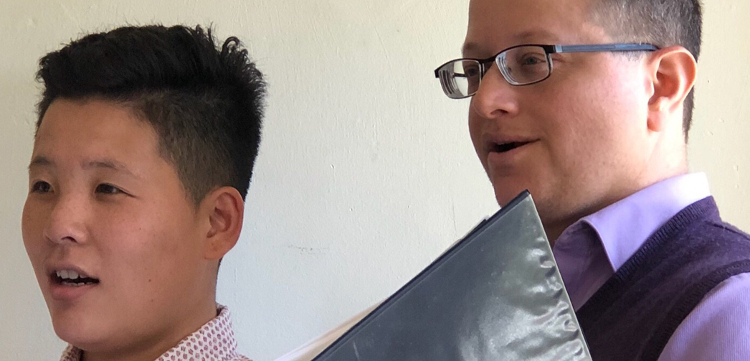
The San Francisco Community Music Center has announced the launch of the New Voices Bay Area TIGQ Chorus, a community choral program for transgender, intersex, and genderqueer participants.

“When I was looking for a Bay Area music organization whose mission was musical access for all people, I naturally thought of CMC,” Reuben Zellman, musical director, educator, and director of the chorus, commented. “As a transgender singer and conductor, I have experienced first-hand the barriers that TIGQ face to musical participation. Singers tend to be rigidly and often thoughtlessly sorted by sex. Yet TIGQ vocal stories are often more complex.”

When Zellman approached CMC program director Sylvia Sherman two years ago to explore the possibility of starting the chorus, she was taken with the idea.

“Musical access is the core of CMC programs. When Reuben brought us the idea we immediately understood the need. Funding, as will any new program, was the hurdle to getting the chorus going,” said Sherman.

Over the course of two years, CMC worked to secure funding for the chorus pilot. Through the generous support of Ambassador James C. Hormel and individual donors, the New Voices Bay Area TIGQ Chorus was born.

Learn more about the chorus here.

About San Francisco Community Music Center

Founded in 1921, San Francisco’s Community Music Center (CMC) is one of the oldest and largest community arts organizations on the West Coast. CMC makes high quality music accessible to all people, regardless of financial means. Last year, CMC awarded over $2 million in tuition assistance, serving more than 2,600 students of all ages, ethnicities and income levels with music lessons, classes and other programs. Thousands enjoyed performances at CMC and out in the community. Learn more about CMC at www.sfcmc.org.