SFAC Becomes First City Department with Explicit Racial Equity Policy

This week, The San Francisco Arts Commission (SFAC) became the first department within San Francisco city government to adopt a formal racial equity policy. According to KQED, "the statement and plan set guidelines for preventing workplace discrimination and inequity, such as earmarking resources for racial equity and collecting and analyzing demographic data to improve the racial equity impact of SFAC programs."

The statement opens with an argument for why focusing on racial equity is crucial for SFAC: "The San Francisco Arts Commission is committed to creating a city where all artists and cultural workers have the freedom, resources and platform to share their stories, art and culture and where race does not predetermine one’s success in life. We also acknowledge that we occupy traditional and unceded Ohlone land. Fueled by these beliefs, we commit to addressing the systemic inequities within our agency, the City and County of San Francisco and the broader arts and culture sector. This work requires that we focus on race as we confront inequities of the past, reveal inequities of the present and develop effective strategies to move all of us towards an equitable future."

Read the full article here.

South Shore Conservatory Announces New Parkinson’s Chorus

South Shore Conservatory (SSC) announced recently the creation of Singing with Parkinson’s, a chorus designed for individuals living with Parkinson's disease and their care partners. This new chorus, a partnership between SSC and the South Shore YMCA, is supported by a grant from the American Parkinson Disease Association, MA Chapter. The first session starts Wednesday, January 16 at the Laura Center for the Arts, South Shore YMCA, 97 Mill Street, Hanover.

“SSC is excited to partner with the South Shore YMCA to bring the first specialized chorus of this type on the South Shore,” said Kathy Czerny, SSC president.  “For years, we have witnessed the power music has to touch all populations, and we hope this weekly musical interlude serves to brighten the lives of all who participate.”

Research shows that those participating in organized music groups experience a sense of belonging.  This is especially meaningful to those dealing with a progressive disease, which can be isolating. Neurologically, music affects the brain and muscles in a way that allows individuals to use their voice and move their bodies more effectively and powerfully. In addition, the structure of music and its ability to re-circuit in our brains when areas shut down, provides opportunity for individuals living with Parkinson’s to address multiple symptoms in a fun and social way.  Singing in a chorus provides patterns, practice habits, and social engagement, designed to maintain not just skills, but quality of life.

Learn more about SSC and the program here.

Settlement Student on How Piano Changed Their Life

Jennifer Weiner, author, NYTimes contributor, and student at Settlement Music School, recently published a column on how playing the piano—and being mediocre at it—has helped her to embrace failure. After publishing an essay collection that did not receive the critical reception she had hoped for, Weiner sought ways to grapple with disappointment. She found an instructor at Settlement and began practicing every day.

"My teacher was a genial man with white hair and an encyclopedic knowledge of all things musical, from the lives of composers to exactly how many versions of a Chopin nocturne were found in his desk after he died," Weiner writes. "After six months, I purchased a keyboard with all 88 keys. After nine months, I found a free piano on Craigslist. Now, a year into my second stint as a piano student, I can proudly announce that I am … still pretty terrible. Except playing the piano has accomplished what all that yoga and meditation never could. I can quiet my mind and focus entirely on something: not my breath, but the music."

Ultimately, she has found comfort in a task that she will never be great at—but loves nonetheless. "In the new year, I will embrace the joy of making music (loosely defined) only for myself. I will invite failure into my life and play without the expectation of being the best, or even mediocre, until failing isn’t a terrifying unknown but just another possibility, and one I can survive."

You can read the full article here.

Report: Arts Education Approaches Supported by ESSA

A new report from the Wallace Foundation surveys research on arts activities that qualify for funding under the Every Student Succeeds Act (ESSA). According to Wallace, "The Every Student Succeeds Act (ESSA) considers arts and music to be essential components of “a well-rounded education” and offers funding to help state and local education agencies teach them in their schools. In order to access this funding, however, education agencies must show evidence that the programs and activities they propose can affect student outcomes.

Researchers from the American Institutes for Research scoured through hundreds of reports to find arts education interventions that meet the standards of evidence that ESSA requires. This report explains ESSA standards and cites 88 studies that make a range of arts-education activities eligible for ESSA.

These activities focus on art forms such as visual arts, music, dance and drama. Among them are arts courses, supplies, professional development for teachers, supports for English learners and extended-learning-time programs. All of the studies cited by the report’s authors show improvements in student outcomes, such as reading, writing, math and social and emotional learning."

Learn more and download the report here.

Afterschool Matters Calls for Papers on Creative Youth Development

Afterschool Matters is a peer-reviewed journal dedicated to promoting professionalism, scholarship, and consciousness in afterschool education. Published by the National Institute on Out-of-School-Time (NIOST) with legacy support from the Robert Bowne Foundation, Afterschool Matters serves practitioners who work with youth in out-of-school time (OST) programs, as well as researchers and policymakers in youth development.
 
The Fall 2019 issue will focus on creative youth development. CYD is a new term for a longstanding theory of practice that integrates creative skill-building, inquiry, and expression with positive youth development principles, fueling young people’s imaginations and building critical learning and life skills. See www.creativeyouthdevelopment.org.

Suggested topics for papers include:

  • Descriptions, research, and analyses of OST programs and initiatives that use CYD to support learning
  • Cultivation of creativity, social and emotional competencies, or leadership skills among CYD program participants
  • Key aspects that define the CYD framework
  • The role of teaching artists in CYD programs; innovative practices of teaching artists
  • How CYD programs engage in holistic approaches and trauma-informed practice
  • Family engagement in CYD programs

Click here for more info on submission.

Case Studies in Distributed Leadership

Community arts organizations regularly look to the communities that they serve to help make decisions about organizational direction. But what does that type of distributed leadership look like within an organization, for the decisions that are made on a daily basis? To explore that question, the "Hewlett Foundation commissioned Open Mind Consulting and Informing Change to develop a set of case studies examining how some nonprofit organizations are incorporating distributed leadership into their organizational structure and practices."

According to the Hewlett Foundation, "The authors of the case studies define distributed leadership along a spectrum, with a sole individual making all decisions—high-stakes or not—at the least distributed end, using information that is exclusive to them (i.e., leadership is singular). This person, in turn, bears complete responsibility for those decisions. At the most distributed end, many people at an organization have a voice in making decisions, including those that are high stakes. Just as these people have access to information that enables them to effectively contribute to these decisions, they also share responsibility for their decisions’ ripple effects."

Learn more and read the full case studies here.

Members Elect New Leaders to Guild Board of Trustees

At the National Guild's Annual Meeting—held at the Conference for Community Arts Education on November 16—members elected five new field leaders to the Guild board of trustees. The Guild is proud to welcome the following individuals to our board:

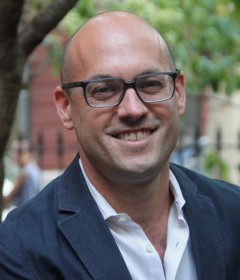
Eric Delli Bovi, Executive Director, Urban Gateways, Chicago, IL

Eric joined Urban Gateways in 2012 to lead a significant expansion of arts programs and services for Chicago’s youth and communities. He has directed the organization through a growth and innovation plan that includes two organizational acquisitions, Art Resources in Teaching (A.R.T.) and Street-Level Youth Media, in addition to numerous successful projects and partnerships.

Chad Cooper, Executive Director, Brooklyn Conservatory of Music, Brooklyn, NY

Chad Cooper joined the BKCM’s Board of Trustees in July of 2014 and served as its Treasurer before joining the staff as Executive Director in August of 2016. Before BKCM, Chad was a Managing Director in the Real Estate Investment Banking Group at Deutsche Bank Securities where he worked for over 15 years covering public and private real estate companies, investment managers and private equity platforms.

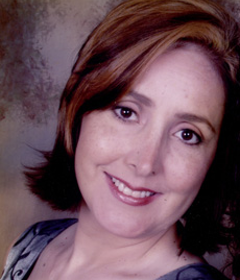
Roma Calatayud-Stocks, Minneapolis, MN

Award-winning novelist and composer Roma Calatayud Stocks holds a bachelor’s degree in Music and Psychology, a master’s degree in Social Work from the University of Minnesota, and post-graduate studies in creative writing from the University of St. Thomas. Roma is the author of two historical novels, A Song in My Heart, and the recently released, A Symphony of Rivals. Roma has twenty years of experience in various roles at arts organizations, including Friends of the Minnesota Orchestra, Film Society of Minneapolis St Paul, MacPhail Center for Music, Minneapolis Institute of Art, Vocal Essence, and Walker Art Center.

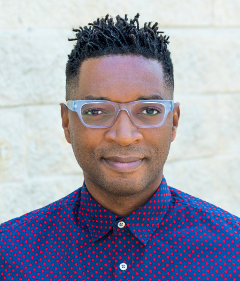
Darren Isom, Executive Director, Memphis Music Initiative, Memphis, TN

As MMI’s Founder and Executive Director, Darren both developed and leads the $20M philanthropic initiative that uses high-quality music engagement programs and activities to drive student, youth, and community outcomes here in Memphis. A proven strategic leader and nonprofit professional, his career demonstrates his commitment to amplifying community voice and engagement in developing and leading innovative, high-impact youth and community programs, practices, and philanthropy.

Peter Simon, President & CEO, Royal Conservatory, Toronto, Canada

Dr. Peter Simon has served as President and CEO of the Royal Conservatory since 1991. Under his leadership, the venerable Canadian institution has undergone a dynamic and dramatic transformation, culminating in the completion of the TELUS Centre for Performance and Learning, the opening of Koerner Hall in 2009 and the formation of a new Performing Arts Division.


Hoff-Barthelson Appoints Chris Kenniff as New Dean of Programs

Hoff-Barthelson Music School is pleased to announce the appointment of Chris Kenniff as its new dean of programs, effective November 29, 2018. In this vital role, Chris will lead the ongoing development and delivery of the School’s comprehensive music education programs for students of all ages and at all levels of development.

“As I join HBMS, I am struck by the school’s comprehensive music programs; it’s reputation for rigorous, conservatory-style training; and it’s excellent, committed faculty,” said Kenniff. “I have long considered Hoff-Barthelson to be an aspirational model for its thoughtful approach to student placement, and the value the school places upon offering students an opportunity to ‘go deep’ at all levels of their training through ensembles, clubs, outreach programs, and musicianship training.”
 
Chris comes to Hoff-Barthelson having served for seven years as director of the Mason Gross School of the Arts Extension Division at Rutgers University. Under his leadership, the Division honed its mission and increased the breadth of programs offered to provide education for students from child and adult beginners to advanced students preparing to enter leading conservatories.

artworxLA Partners with LAUSD to Support Student Graduation

According to LAist, "More than 15,000 high school students in Los Angeles County dropped out of school in the 2016-2017 school year. And while Los Angeles Unified didn't publicly report an official dropout rate, it has been actively working to bring dropouts across the board under 10% by 2020. And the nation's largest school district is now trying a new focus on the arts to keep some struggling students in the classroom. That focus is what makes the Design and Media Arts Academy different from other schools also catering to students who don't make it in the traditional school system. The new academy—a partnership between LAUSD and an arts non-profit called artworxLA—requires eight hours of art classes each week."

"One of main things that I hear when I come here is laughter. I walk into a classroom and I see engagement. I see students who are interested in what they're doing, excited to be exploring," artworxLA former executive director Cynthia Campoy Brophy explained. "I see students who are working collaboratively."

Take a tour of the academy and learn more about the collaboration here.

New Board Candidates

We have a fantastic group of seven arts education leaders up for election to the Guild board of trustees. We offer five new Guild trustees for your consideration- three at-large candidates and two directors of Full Member institutions- in addition to two current at-large trustees seeking re-election. 

As a Full Member of the National Guild, organizations may cast one vote in the election of the 2018 slate of National Guild trustees. Online voting will close on Wednesday, November 14, at midnight EDT. Members can use the following link to cast their vote: VOTE!

Below are the bios of New Board Candidates – November 2018


Directors of Full Member Institutions seeking first three-year term:

Eric Delli Bovi, Executive Director, Urban Gateways, Chicago, IL

Eric joined Urban Gateways in 2012 to lead a significant expansion of arts programs and services for Chicago’s youth and communities. He has directed the organization through a growth and innovation plan that includes two organizational acquisitions, Art Resources in Teaching (A.R.T.) and Street-Level Youth Media, in addition to numerous successful projects and partnerships. Eric also serves on the Arts Education Network Council for Americans for the Arts to support national initiatives in the field. Prior to working at Urban Gateways, Eric led the Old Town School of Folk Music’s capital campaign for a new arts education facility and oversaw unprecedented growth in fundraising to support a wide array of education and performance initiatives. Over his 12-year tenure at the Old Town School of Folk Music he served as Interim Executive Director, Director of External Affairs, Director of Education Outreach, and as a percussion faculty member. Eric was named a Chicago Community Trust Fellow in 2010 and was elected to the Emerging Leaders Council for Americans for the Arts in 2005. Eric holds an M.A. from DePaul University with a focus in directing and developing community arts education organizations, and a B.A. from Ithaca College in Social Studies/Secondary Education. A professional musician, Eric also continues to perform in the local music scene.

Chad Cooper, Executive Director, Brooklyn Conservatory of Music, Brooklyn, NY

Chad Cooper joined the BKCM’s Board of Trustees in July of 2014 and served as its Treasurer before joining the staff as Executive Director in August of 2016. Before BKCM, Chad was a Managing Director in the Real Estate Investment Banking Group at Deutsche Bank Securities where he worked for over 15 years covering public and private real estate companies, investment managers and private equity platforms. Prior to Deutsche Bank, Chad worked for four years at the St. Louis Development Corporation, the economic development agency of the City of St. Louis, Missouri. There, he designed and implemented community and economic development programs targeted towards alleviating poverty in some of the most economically distressed neighborhoods in St. Louis and East St. Louis. During his time in St. Louis, Chad also co-founded a project-based grassroots non-profit organization called Metropolis Saint Louis, whose mission it was to foster greater engagement of young people in city revitalization efforts.


At-Large Candidates seeking first three-year term:

Roma Calatayud-Stocks, Minneapolis, MN

Award-winning novelist and composer Roma Calatayud Stocks holds a Bachelor’s degree in Music and Psychology, a Master’s degree in Social Work from the University of Minnesota, and post-graduate studies in creative writing from the University of St. Thomas. Roma is the author of two historical novels, A Song in My Heart, and the recently released, A Symphony of Rivals. She’s currently working on the third installment of the series, An Ode to Joy. And in line with her life passion and commitment to bring forth the contributions of all cultures through the arts, Roma’s narratives, set to music, provide a window to locations across the world, while also addressing poignant issues, politics of the era, and history. Calatayud-Stocks released two albums, “A Song in My Heart,” to accompany her debut novel, A Song in My Heart, and “Carnival of Life.” With classical, jazz, and Latin musical influences, the albums, performed by an acoustic ensemble, showcase her original songs and instrumental compositions. Roma has twenty years of experience in various roles at arts organizations, including Friends of the Minnesota Orchestra, Film Society of Minneapolis St Paul, MacPhail Center for Music, Minneapolis Institute of Art, Vocal Essence, and Walker Art Center. She has toured the United States to present her work at universities, libraries, women’s clubs, and book fairs. Roma lives in Minneapolis with her husband, Tom.

Darren Isom, Executive Director, Memphis Music Initiative, TN

As MMI’s Founder and Executive Director, Darren both developed and leads the $20M philanthropic initiative that uses high-quality music engagement programs and activities to drive student, youth, and community outcomes here in Memphis. A proven strategic leader and nonprofit professional, his career demonstrates his commitment to amplifying community voice and engagement in developing and leading innovative, high-impact youth and community programs, practices, and philanthropy. Prior to MMI, Darren was a manager at The Bridgespan Group where he was a strategic advisor to nonprofit and foundation leaders in youth and community development, foundation strategy, and education policy. Before Bridgespan he worked as the Art, Design, and Public Programming director for Times Square Alliance, planning and implementing programming for public art and performance initiatives throughout the Times Square District. Prior to working at Times Square Alliance, Darren served as VP of Programs for Groundwork, a start-up youth services organization in East New York, Brooklyn, helping young people in underserved communities develop their strengths and skills through experiential learning and enrichment programs. Before joining Groundwork, Darren worked as the director of Global Logistics for CSI, an international trade finance group, where he managed strategy, organization, and change management projects in Belgium, Spain, France, The Netherlands, and Germany. A seventh generation New Orleans native, Darren is a graduate of Howard University, Institut d'Études Politiques de Paris, and Columbia Business School’s Institute for Nonprofit Management. An activist for disconnected youth and LGBT communities of color, he has served as an advisor to the leaders of several Bay Area and national foundations and currently serves on the board of Beloved Community, Collage Dance Collective, and Creative Works.

Peter Simon, President & CEO, Royal Conservatory, Toronto

Dr. Peter Simon has served as President and CEO of the Royal Conservatory since 1991. Under his leadership, the venerable Canadian institution has undergone a dynamic and dramatic transformation, culminating in the completion of the TELUS Centre for Performance and Learning, the opening of Koerner Hall in 2009 and the formation of a new Performing Arts Division. Dr. Simon also created Learning Through the Arts in 1994, an acclaimed program used in hundreds of schools nationwide to advance the effectiveness of public education and to offer youth at risk a more meaningful learning environment. In 1997 he founded The Glenn Gould School an internationally recognized training centre for gifted young musicians and in 2002, the ARC Ensemble the RCM’s Grammy nominated Ensemble in Residence. Most recently the Marilyn Thomson Early Childhood Education Centre was inaugurated with the aim of designing developmental programs in conjunction with the RCM’s neuroscience Research Centre. Today approximately 500,000 students across Canada and the United States utilize the RCM curriculum and assessment system to study a musical instrument and develop an appreciation of creative activity. More than 30,000 independent music teachers and schools are supported by an array of materials and learning platforms provided by the RCM. Dr. Simon’s began his musical studies at the RCM as a student of Boris Berlin. He subsequently studied at the Juilliard School, in London England and at the University of Michigan with the legendary pianist Leon Fleisher. Dr. Simon is married to the Canadian pianist Dianne Werner. They have two children, Nicole and Justin.