Introducing the 2018 Class of CAELI

The National Guild for Community Arts Education is pleased to announce the 2018 class of the Community Arts Education Leadership Institute (CAELI). Twenty-six individuals representing community arts education organizations across the nation were selected to participate in CAELI, a leadership program designed for individuals in the nonprofit arts education sector.

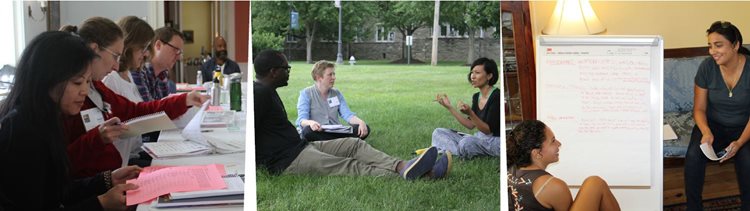
Over the course of eight months, the program provides participants the opportunity to hone and advance leadership skills and effectiveness through a sequential curriculum that includes virtual workshops, one-on-one coaching with top trainers and practitioners, and an introspective dive into how being a leader impacts the personal and the professional. Participants attend a five-day, in-person seminar held at Bryn Mawr College in Philadelphia, PA in July.

The CAELI class of 2018 will join an alumni network, more than 200 members strong, offering peer mentorship and a trove of resources for continued development long after the conclusion of the program. Together, these leaders represent our best opportunity to ensure all people have access to opportunities to maximize their creative potential.

“We are excited to welcome the class of 2018,” said National Guild executive director Jonathan Herman. “Organizations need strong leadership to secure their futures and to ensure equitable access to lifelong learning in the arts for all. We look forward to seeing how this talented group of leaders shape the future of arts education.”

CAELI is now in its ninth year and is led in collaboration with Partners in Performance, Inc.

Supporters of CAELI have included American Express Foundation, The Cleveland Foundation, Pennsylvania Council on the Arts, the National Endowment for the Arts, the National Guild's board of trustees, and other generous individuals.

Through a competitive process, this year’s class includes:

  • Jeffrey Allen, Director of Arts Education, Cleveland Metropolitan School District, Cleveland, OH
  • Nicole Amri, Program Director, SAY Sí, San Antonio, TX
  • Mariana Astorga-Almanza, Visual and Performing Arts Coordinator, Lynwood Unified School District, Lynwood, CA
  • Ashley Blakeney, Program Manager, Pablove Foundation, Los Angeles, CA
  • Lindsey Buller Maliekel, Director of Education/Public Engagement, The New Victory Theater, New York, NY
  • David R. Carter, Executive Musician, Tulsa Symphony, Tulsa, OK
  • Eepi Chaad, Youth and Community Outreach Coordinator, Art League Houston, Houston, TX
  • Jennifer DiFiglia, Senior Director of Programs, LEAP, New York, NY
  • Tarah Ortiz Durnbaugh, Performance Programs Manager, Urban Gateways, Chicago, IL
  • Paul A. Ellis, Jr., Executive Director and General Counsel, August Wilson House,
  • Pittsburgh, PA
  • Quanice G. Floyd, Founder and Director, Arts Administrators of Color Network, Washington, DC
  • Julianne Gadoury, Arts Education Coordinator, New Hampshire State Council of the Arts, Concord, NH
  • Lynn Hoare, Senior Director of School-based Programs, Creative Action, Austin, TX
  • Rosa Hyde, Senior Manager, New Jersey Performing Arts Center, Newark, NJ
  • Jackson Elisabeth Knowles, Program Director, MINDPOP, Austin, TX
  • Kearsten Kuroishi, Director of Education, City of Las Vegas’ Rainbow Company Youth Theater, Las Vegas, NV
  • Julia López, Programs Manager, Mural Arts Philadelphia, Philadelphia, PA
  • Emily Magenheimer, Campus Manager, Levine Music, Washington, DC
  • Kevin D. Marr II, Dance Director, All-City Dance Ensemble, Cleveland, OH
  • Devon Miller, Managing Director, Junior Players, Dallas, TX
  • Beverly E. Mislang, Associate Director of Development, Youth Speaks, San Francisco, CA
  • Paul Moshammer, Studio Director, Creativity Explored, San Francisco, CA
  • Rebekka Nickman, Program Manager, DC Collaborative, Washington, DC
  • Melissa Gawlowski Pratt, Assistant Director, Lincoln Center Education, New York, NY
  • Chad Swan-Badgero, Program Manager, Michigan Council for Arts and Cultural Affairs,
  • Lansing, MI
  • Molly Terbovich-Ridenhour, President and Chief Executive Officer, San Diego Civic Youth Ballet, San Diego, CA
National Guild Joins Host Commitee to Welcome DOE Chancellor

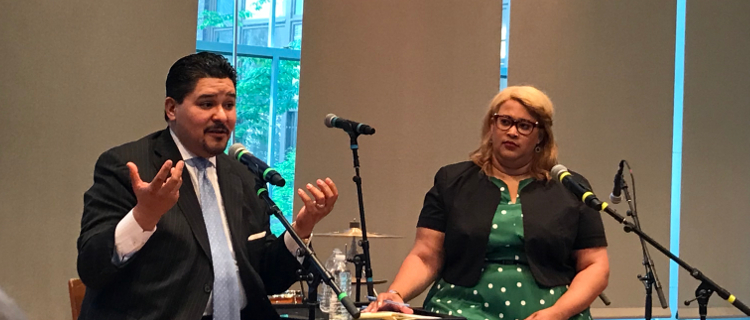
On Wednesday May 9, 2018, New York City arts educators welcomed Richard A. Carranza, the new Department of Education Chancellor. The National Guild participated as a member of the host committee, alongside Americans for the Arts, Arts Education Partnership, Carnegie Hall, Center for Arts Education, Cultural Institutions Group, and New York City Arts in Education Roundtable.

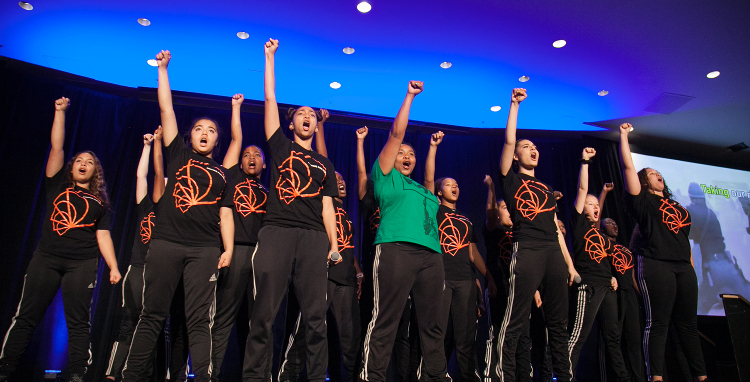
The welcome featured performances from Guild members DreamYard (Bronx, NY) and Carnegie Hall’s Future Music Project (New York, NY). Courtney Boddie, director of education and school engagement at The New Victory Theater (New York, NY), moderated the conversation with Mr. Carranza. During the presentation, Mr. Carranza also performed for the group, demonstrating his talents as a mariachi musician.

Mr. Carranza is tasked with educating over 1.1 million students and, in regards to arts education, faces an uphill battle. According to 2014 data from the city comptroller, 28 percent of NYC schools have no certified arts teachers, 16 percent of schools have no arts or cultural partnerships, and 10 percent of schools have no dedicated arts room. A recent article in the NY Times highlighted that, as large, struggling public school are shuttered by the DOE, the smaller schools that take their place are not providing comprehensive arts learning, particularly music education.

The Chancellor has noted that he hopes one of his legacies will be that “New Yorkers have really seen how students have much more diversity in what their experiences are in fine arts.” During the welcome, he expressed a similar commitment to supporting arts education and using it as a tool to drive student success.

You can read Mr. Carranza’s full interview with the NY Times here.

Cross-Sector Coalition Releases Recommendations to Advance Role of Creativity in Youth Development

The Creative Youth Development National Partnership, in concert with more than 650 cross-sector stakeholders nationally, is calling for all young people to have equitable access to opportunities to: realize their creative potential; live richer, fuller lives; and develop the critical learning and life skills they need to become active contributors to their communities.

Read the Creative Youth Development National Blueprint and subscribe to the CYD Partnership eNews to receive regular updates on creative youth development (CYD) news, opportunities, and resources. The CYD National Partnership will host an online forum in May to discuss the Blueprint’s three strategic priority areas.

Creative youth development is a long-standing practice that integrates creative skill-building, inquiry, and expression with positive youth development principles. In these programs, young people create original work—including animated films, 3-D printed sculptures, dance and theater productions, musical compositions, curated book collections, and more—and apply their creative skills to solve problems, shape their lives, and imagine and build the world in which they want to live.

With support from the National Endowment for the Arts, the CYD National Partnership—which includes the National Guild for Community Arts Education, Americans for the Arts, the Mass Cultural Council, and formerly the President’s Committee on the Arts and the Humanities—gathered input on strategies to expand the reach and impact of CYD through numerous community conversations throughout the country over an 18-month period.

The resulting Creative Youth Development National Blueprint identifies three strategic priorities for advancing CYD:

  • VISIBILITY & IMPACT: Documenting and Communicating Outcomes and Impact
  • FUNDING: Expanding Pathways to Funding
  • FIELD BUILDING: Professional Development, Networking, and Technical Assistance

Woven throughout the Blueprint are core values of the CYD coalition: racial equity and social justice, youth voice, and collective action. Read the Executive Summary.

“Creative youth development has the unique potential to deepen and sustain youth engagement by providing opportunities for youth to develop their creative potential, amplify their voices, and build leadership skills,” said Jonathan Herman, Executive Director of the National Guild for Community Arts Education. “For many youth, CYD programs also can be a pathway to other services such as college and career readiness, mental health services, academic support, and more.”

Participants in this national movement include youth, practitioners, researchers, funders, policy makers, and other stakeholders in creative youth development and allied sectors. The Partnership also commissioned research by the Forum for Youth Investment that mapped opportunities for alignment, e.g. developing social emotional competence; promoting healthy decision making/behaviors; and reengaging young people in positive learning and work environments, among CYD and allied youth sectors, including afterschool, juvenile justice, mental health, education, and workforce development. Three cross-sector Action Teams were then formed to analyze and distill the research and stakeholder inputs and make final recommendations for the Blueprint.

“Providing today’s youth with the skills they need to lead fulfilling lives across all economic, social, and family circumstances is a large-scale undertaking,” said Erik Peterson, Vice President of Policy, Afterschool Alliance. “To do this urgent work effectively, we must work together to share lessons learned, networks, and resources.”

The Blueprint will evolve as implementation unfolds and will be updated online to reflect progress toward goals.

The Creative Youth Development National Partnership aims to ensure that creative youth development is a broadly-implemented, well-researched, and equitably-funded practice and available to all youth so that they may realize their full potential and thrive.

CYD National Partners include:

The National Guild for Community Arts Education, which ensures all people have opportunities to maximize their creative potential by developing leaders, strengthening organizations, and advocating for community arts education.

Americans for the Arts, which serves, advances, and leads the network of organizations and individuals who cultivate, promote, sustain, and support the arts in America. www.americansforthearts.org

Mass Cultural Council, a state agency supporting the arts, humanities, and sciences in order to improve the quality of life in Massachusetts and its communities. Over the past 20 years, Mass Cultural Council has invested more than $10 million in creative youth development, resulting in a vibrant community of programs. www.massculturalcouncil.org

Cross-Sector Coalition Releases Recommendations to Advance the Role of Creativity in Youth Development

The Creative Youth Development National Partnership, in concert with more than 650 cross-sector stakeholders nationally, is calling for all young people to have equitable access to opportunities to: realize their creative potential; live richer, fuller lives; and develop the critical learning and life skills they need to become active contributors to their communities.

Read the Creative Youth Development National Blueprint and subscribe to the CYD Partnership eNews to receive regular updates on creative youth development (CYD) news, opportunities, and resources. The CYD National Partnership will host an online forum in May to discuss the Blueprint’s three strategic priority areas.

Creative youth development is a long-standing practice that integrates creative skill-building, inquiry, and expression with positive youth development principles. In these programs, young people create original work—including animated films, 3-D printed sculptures, dance and theater productions, musical compositions, curated book collections, and more—and apply their creative skills to solve problems, shape their lives, and imagine and build the world in which they want to live.

With support from the National Endowment for the Arts, the CYD National Partnership—which includes the National Guild for Community Arts Education, Americans for the Arts, the Mass Cultural Council, and formerly the President’s Committee on the Arts and the Humanities—gathered input on strategies to expand the reach and impact of CYD through numerous community conversations throughout the country over an 18-month period.

The resulting Creative Youth Development National Blueprint identifies three strategic priorities for advancing CYD:

  • VISIBILITY & IMPACT: Documenting and Communicating Outcomes and Impact
  • FUNDING: Expanding Pathways to Funding
  • FIELD BUILDING: Professional Development, Networking, and Technical Assistance

Woven throughout the Blueprint are core values of the CYD coalition: racial equity and social justice, youth voice, and collective action. Read the Executive Summary.

“Creative youth development has the unique potential to deepen and sustain youth engagement by providing opportunities for youth to develop their creative potential, amplify their voices, and build leadership skills,” said Jonathan Herman, Executive Director of the National Guild for Community Arts Education. “For many youth, CYD programs also can be a pathway to other services such as college and career readiness, mental health services, academic support, and more.”

Participants in this national movement include youth, practitioners, researchers, funders, policy makers, and other stakeholders in creative youth development and allied sectors. The Partnership also commissioned research by the Forum for Youth Investment that mapped opportunities for alignment, e.g. developing social emotional competence; promoting healthy decision making/behaviors; and reengaging young people in positive learning and work environments, among CYD and allied youth sectors, including afterschool, juvenile justice, mental health, education, and workforce development. Three cross-sector Action Teams were then formed to analyze and distill the research and stakeholder inputs and make final recommendations for the Blueprint.

“Providing today’s youth with the skills they need to lead fulfilling lives across all economic, social, and family circumstances is a large-scale undertaking,” said Erik Peterson, Vice President of Policy, Afterschool Alliance. “To do this urgent work effectively, we must work together to share lessons learned, networks, and resources.”

The Blueprint will evolve as implementation unfolds and will be updated online to reflect progress toward goals.

The Creative Youth Development National Partnership aims to ensure that creative youth development is a broadly-implemented, well-researched, and equitably-funded practice and available to all youth so that they may realize their full potential and thrive.

CYD National Partners include:

The National Guild for Community Arts Education, which ensures all people have opportunities to maximize their creative potential by developing leaders, strengthening organizations, and advocating for community arts education.

Americans for the Arts, which serves, advances, and leads the network of organizations and individuals who cultivate, promote, sustain, and support the arts in America.www.americansforthearts.org

Mass Cultural Council, a state agency supporting the arts, humanities, and sciences in order to improve the quality of life in Massachusetts and its communities. Over the past 20 years, Mass Cultural Council has invested more than $10 million in creative youth development, resulting in a vibrant community of programs. www.massculturalcouncil.org

Remembering Margaret Perry, Founder of Austin’s Armstrong Community Music School

Margaret Perry, founding director of Armstrong Community Music School (ACMS), former Guild trustee, and beloved member of the National Guild community, passed away on Thursday, April 5th, 2018. Margaret stepped down from her position at ACMS after learning of a cancer diagnosis and, according to ACMS, she “dealt with her treatment and final stages with grace, honesty, humor, and a depth of courage that was miraculous to witness.”

Margaret Perry was a music educator for 38 years. Trained originally as a harpsichordist, Margaret performed with Baroque music groups around Texas, and served for several years as the pianist for the Houston Ballet. Margaret taught music in both public and private schools in the U.S. and Europe, and maintained a private piano teaching practice in Austin for more than three decades. She lectured extensively on the lives of composers and opera history for both children’s classes and adult opera audiences, and created curricula for general musical studies for many ages.

Margaret was a trustee for nine non-profit boards in the Austin area, and was elected chairman of three of these. She served for six years on the board of trustees for the National Guild. She served as a trustee for Austin Classical Guitar and La Follia, and served in an advisory capacity for KMFA, Creative Action Project, Chamber Music in Public Schools (CHAMPS), and the Physics Advisory Board at the University of Texas.

In April of 2000, she became the founding director of the Armstrong Community Music School, the first music school in the world to be established by an opera company, after serving as the director of education of Austin Lyric Opera for eighteen years. In March of 2003, the city of Austin presented Margaret a Community Service Award, and the same year the State of Texas declared a day in her honor for thirty years of arts advocacy and education. In 2010, Margaret was given a “Profiles in Power: Women of Influence” award by the Austin Business Journal.

Margaret and the National Guild

In 2012, the Guild presented Margaret with the National Guild Service Award, in recognition of her remarkable service to the Austin arts community and the National Guild board of trustees. In her acceptance speech, she spoke about the importance of finding a national community as she moved into her role as director of ACMS. She also spoke powerfully about the vital role of the arts, saying:  “What about that first time a child takes clay into his hand and molds something beautiful. Or he makes a colorful collage. Or he paints a canvas and before him his creative expression is made real. And he is forever changed because of that experience. That is the work that we are doing and that is the work that the National Guild is supporting.” You can watch the full acceptance speech here.

Last year, in a GuildNotes article looking at what is required of leaders moving into the future, Margaret made the following observations: “Looking toward the future, it is likely that demand for the arts will continue to outpace the services that we can provide. Our difficulties may never go away. However, effective leaders should recognize that difficult times can be the catalyst for everyone in the arts to embrace their personal leadership. Those of us who know the healing power and energizing beauty of the arts need to personally set goals for action.” You can read the full article here.

Honoring Margaret’s Legacy

In honor of Margaret’s remarkable contribution to her community, to the National Guild, to arts education, and to the many young leaders that she supported with guidance and mentorship, the National Guild is pleased to announce the Margaret Perry Leadership Fund. This fund will be used to support the development of arts education leaders who, like Margaret, will make a lasting impact of positive change on their communities. You can support the Margaret Perry Leadership Fund via a donation here.

Guild Announces 2018 Community Arts Education Leadership Institute (CAELI)

The National Guild is pleased to announce that applications are now being accepted for the 2018 Community Arts Education Leadership Institute (CAELI). Now in its ninth year, CAELI provides an intensive, transformative experience through which both experienced and developing leaders advance their skills through a carefully structured, personalized program, working with top leadership trainers and nationally renowned practitioners.

The eight-month program includes a five-day seminar (July 24-28, 2017) at Bryn Mawr College in Philadelphia, a 360-degree feedback process, and follow-up coaching. It is designed and facilitated in collaboration with Partners in Performance, Inc.

The community arts education field, made up a great many and varied types of nonprofit arts education providers, is growing more diverse in all ways, facing complex organizational challenges and undergoing a significant generational transition in leadership. Today's community arts education organization has many stakeholders—students, parents, donors, community partners, faculty, trustees, and staff—each placing their own demands on the institution and its leaders. Organizational effectiveness is frequently dependent upon executives' ability to understand and mediate among these critical yet often competing priorities.

Research has shown that leaders who can establish a unifying vision, devise strategies that align stakeholder commitments, and build a culture of trust and effectiveness are most successful. With the ongoing pressure to deliver the important programs and services that arts education organizations provide, however, many leaders find it difficult to develop this crucial expertise.

"Strong arts organizations require effective and skilled leadership," said National Guild executive director Jonathan Herman. "The Guild’s Community Arts Education Leadership Institute develops the next generation of leaders for our field, which in turn supports the organizations that provide quality arts education to communities across the country."

CAELI is ideally suited for those already in, or preparing to move into, a leadership role at a non-profit organization within the community arts education field. To optimize the learning experience, participation is limited to 26 individuals selected through a competitive application process.

The National Guild is committed to expanding participation to individuals who represent the many diversities of our field, and particularly for African, LatinX, Asian, Arab, and Native American (ALAANA) leaders and representatives of small-budget and culturally-specific organizations. The Guild’s efforts have resulted in increasingly diverse and inclusive CAELI cohorts each year. To promote greater equity and a diverse group of participants, limited need-based financial aid scholarships and travel stipends are available.

The skills and knowledge gained through CAELI will prepare participants to:

  • Manage competing priorities within their organizations
  • Build effective, collaborative organizational cultures amongst their board, staff, faculty/teaching artists, and other stakeholders
  • Articulate organizational vision and implement effective strategies in pursuit of institutional goals
  • Be successful leaders

Graduates of the program will also have access to the support of our vibrant CAELI alumni network; arts education leaders at organizations of all kinds across the country. This network provides community and support, including opportunities for further leadership development and collaboration with peers through Guild-led alumni-only events and workshops.

"The institute offers a perfect balance of instruction, introspection, coaching, and practical application. All of its elements add up to an experience that profoundly helps emerging leaders develop personally and professionally," said one CAELI alum. Another called CAELI, "by far the most comprehensive and effective training experience I have had in my 20 years in arts education."

Application forms, financial aid information, and program details are available online at www.nationalguild.org/caeli. CAELI is a fee-based program, but financial aid and travel stipends are available by application. The application and financial aid deadlines are Friday, April 6. Applicants can learn more about CAELI and the characteristics of a successful application through the Applicant Orientation Webinar, February 14 at 1:00pm ET.

Support for CAELI has been provided by the American Express Foundation, The Cleveland Foundation, and the Pennsylvania Council for the Arts.

Guild to Host Conference Planning Meeting in Baltimore

The National Guild, in partnership with the Maryland Institute College of Art (MICA) and Fleisher Art Memorial, is pleased to present a program planning meeting for the 2018 Conference for Community Arts Education. The town-hall-style meeting will be presented in Baltimore at MICA, Tuesday, February 6, from 10:00am to 12:00pm, with a complimentary networking lunch from 12:00pm – 1:00pm.

The Program Planning Meetings provide leaders in arts education with an opportunity to shape the Conference for Community Arts Education (November 14-17, 2018, Baltimore) by identifying critical issues and opportunities affecting the field. Our goal is to have a diverse and representative group from the region at this public meeting. The conference annually brings together 700+ leaders in arts education and adjacent sectors to explore effective strategies and innovative ideas for increasing equitable access to arts learning opportunities in communities across the country.

To learn more about the Conference, including past program offerings and featured speakers, please visit our website.

2017 Conference Reflections: Cherie Hill

Last year's Conference for Community Arts Education in the Bay Area brought together staff, students, administrators, funders, policymakers, and stakeholders representing over 400 organizations from 40 states, Canada, and South Korea. Each year, the Guild is humbled by the amount of expertise, inspiration, enthusiasm, and joy that our delegates bring to the Conference experience. As a way to highlight those delegate voices, we are sharing a series of 2017 Conference Reflections.

Below, Cherie Hill, teaching artist and chief of staff at Luna Dance Institute, shares her thoughts on building hope and maintaining balance. 

Here on the pulse of this new day
You may have the grace to look up and out
And into your sister’s eyes, into your brother’s face
Your country, and say simply very simply
With hope—Good morning. 
– 
Maya Angelou

The 80th Annual Conference for Community Arts Education was my first National Guild Conference. As I wondered at the elevators and the immaculate chandeliers at the Westin St. Francis Hotel in San Francisco, I was greeted by bright and joyous faces coming in and out of sessions. The rooms held a buzz as persons shared tables and halls. My interactions with others—hearing their stories, making new connections, and sharing our excitement for arts education filled me with hope. Hope! Was this the conference’s magic ingredient?

Opening plenary keynote speaker Hasan Davis delivered hope as he captivated attendees with his biographic story of art and childhood perseverance. “I am asking you to be the hope dealers, not the hope stealers,” he emphasized. But how do we keep dealing hope while maintaining our own life balance? What are the best ways to cultivate hope for communities in despair? Questions such as these continued to surface as I navigated through the conference.

Speaker Ronnie Brooks connected hope to memories of success in the CAELI alumni pre-conference. The session, “Refuse to Despair: Building Community, Generating Hope, Demonstrating Courage” stimulated us to find our own methods for hope by looking within. She explained that memory produces hope the same way fatigue produces despair. If we can tap into the memories of what success looks and feels like, we can relate to hope and the desire to make something happen.

In the public forum led by Marc Bamuthi Joseph as part of the conference’s Creative Youth Development track, attendees broke into small groups. Each group had the opportunity to dialogue with youth from YBCA’s Youth Fellows and First Exposures programs. For me, hearing the youth’s desires for more responsibility and agency was surprising. I was inspired by their ideas, passion, and will. Bamuthi proposed an idealist question: What if instead of investing 51 million dollars into a San Francisco prison, our government spent the money on youth collaborating to create new policy? Together we discussed and grappled with this and other strategic questions related to justice, co-design, and centering young people in civic leadership.

At the casual food for thought luncheon “work/life balance for parents and caregivers” three round tables were placed together and filled with women. The space felt comfortable as we shared our conflicting desires to work hard and be dependable, while yearning for more time with our families and for ourselves. Strategies for achieving personal time ranged from insisting that the executive director give weekend schedules in advance to embracing work time as connected to purpose. In other words, can we be ok with working on a Saturday if we truly believe we are destined to make a difference?

In my role as Chief of Staff at Luna Dance Institute, I often think about contentment in relation to staff retention. In the teaching artist development lunch meeting both program directors and teaching artists attended. Issues that emerged included teaching artists pay. Should teaching artists be paid to make phone calls? What state laws require teaching artists be paid for work for outside of their teaching contract? I suggested we refer to our organizations’ core values for help. At Luna, relationship is at the core. We prioritize teachers building relationships with students and their families. Our unique structure requires all teaching artists to work full time and hold an administrative role. This model, along with our core values, guides our decisions. Other organizations shared that they hold the artist at the core referring to their teachers as artist-teachers. I was specifically intrigued by Travis Laughlin from the Joan Mitchell Foundation’s question, “How does your organization support both the teacher and the artist?”

On the final day of the conference at Luna Dance Institute’s site-visit and panel, “Community, Power, and Privilege” facilitated by Nancy Ng, Director of Community Engagement, we discussed what equity means and how it is practiced. Judith Smith, founder of Axis Dance Company pointed out that 20% of the population identifies as disabled, yet disabled artists and educators continue to be underrepresented. Tammy Johnson encouraged us to talk about the future we want, and referenced Afro-futurism, and Eddie Madrill shared that for him, equity comes from love. I shared a story from my teaching at a school in East Oakland where equity meant stepping back, allowing my students to be the teacher. We ended the session with a barefoot improvisational dance jam in the studio.

The hope dealt at the Community Arts Education Conference was powerful and contagious. I am holding onto it, planting the conference memories into my brain, body, and spirit. When I need hope, I know where to find it.

2017 Conference Reflections: Indi McCasey

Last year's Conference for Community Arts Education in the Bay Area brought together staff, students, administrators, funders, policymakers, and stakeholders representing over 400 organizations from 40 states, Canada, and South Korea. Each year, the Guild is humbled by the amount of expertise, inspiration, enthusiasm, and joy that our delegates bring to the Conference experience. As a way to highlight those delegate voices, we are sharing a series of 2017 Conference Reflections.

Below, Indi McCasey, a creative educator and community catalyst in Oakland, CA, shares his thoughts on social justice at the Guild Conference and the rumblings of a movement.

As someone born and raised in the Bay Area, having the 2017 Conference for Community Arts Education in San Francisco this year felt like a homecoming. Since attending the 2017 Conference planning meeting at the Mission Cultural Center, I’ve been excited to show off the brilliance of local creative educators, artists, and activists of all ages. At the same time, it seemed like San Francisco could serve as a catalyst for difficult conversations given the hotbed of issues surrounding efforts to continue cultural legacies and sustain creative communities in the face of gentrification and displacement.

When Hasan Davis described himself as a “hope dealer” in the opening plenary and challenged the audience by asking us if our work in community arts is more “hospice or hope?”, I knew that this conference would not shy away from issues of social justice. His bold statement that he became a lawyer in order to better understand the system and that “we need to take control of those environments to do the work of justice” made me think about my own interest in better understanding school systems in order to move the climate and culture of schools to one that centers students and their families rather than criminalizes them. Hasan made me wonder if my work in arts education was trying to simply ease the suffering of those who are most vulnerable, our young people and elders, with fun arts experiences or whether my work supports the use of art and creativity as tools to collaboratively envision a more just future?

This question reverberated again with Robyne Walker Murphy’s session, aptly named Are You Ready to Be Radical?, when she referenced a quote from filmmaker Ava DuVernay: “I believe that art is seeing a world that doesn’t exist yet.” In Robyne’s session she spoke of the importance of “narrative shifting” and we discussed the example of challenging the notion of “at-risk”. While this term is often applied as a euphemism for Black and Brown youth whose families endure socially sanctioned poverty, we wondered if there were also behaviors that affluent, white youth might be “at-risk” of developing that could keep them from growing into self-reflective, compassionate people?

And I saw manifestations of a narrative shift around our work at this year’s conference.

I saw it in the grappling around the language and methodologies of the emerging field of Creative Youth Development.

I saw it in the recognition of Lara Davis’ leadership in the arts and her unwavering commitment to racial justice.

I saw it in the forum between Hasan Davis and James Horton, the first time I had seen James share his wealth of knowledge on the conference stage after years of working magic behind the scenes.

I felt this shift in the day-long Racial Equity Institute at Destiny Arts Center in Oakland. A multi-racial group of 60 community arts practitioners came together and spend time in affinity groups that mirrored the recently formed Guild Networks: the ALANNA (African, Latinx, Asian, Arab and Native American) Network and the White Co-Conspirator Network. Both networks strive to support the leadership of people of color and the building of racial literacy to work collectively towards social change and racial justice within our field. While the facilitators learned a lot in the process, we were also grateful for the opportunity to spend the afternoon using theater, movement, and small group conversations to engage around issues of equity, challenging power dynamics, and white privilege.

I especially felt this movement in the riveting performance at the Saturday morning awards breakfast by emerging artists ages 13-24 from Destiny Arts Center in Oakland, Mosaic in Detroit, and Raw Art Works in Lynn, MA. Like many in the audience, I felt tears in my eyes during the collaborative performance of “All Good People” with the lyric "We can't hold our breath forever when our brothers (and sisters) cannot breathe."

As an ambassador of the Guild, I feel shaken and awakened by all of these moments. They communicate the rumblings of a movement. It’s a movement that resists the fear that permeates our current national conversation, by calling for a future that involves a more collaborative, intergenerational approach to leadership. It’s a movement shaped by those most vulnerable in our society including young people and elders of color, artists and educators, and newcomers to this country. It’s a movement that honors the legacies of those who came before us while also acknowledging their harmful mistakes. I see the potential for the Guild to convene all of us to learn together so that we may be better prepared to listen, to grow, and to hope.

2017 Conference Reflections: Lee B. Todd

Last year's Conference for Community Arts Education in the Bay Area brought together staff, students, administrators, funders, policymakers, and stakeholders representing over 400 organizations from 40 states, Canada, and South Korea. Each year, the Guild is humbled by the amount of expertise, inspiration, enthusiasm, and joy that our delegates bring to the Conference experience. As a way to highlight those delegate voices, we are sharing a series of 2017 Conference Reflections.

Below, Lee B. Todd, senior director of creative youth development for Boys & Girls Clubs of America, shares her thoughts on the inspiration, camradery, and community that was generated in the Bay. 

As I arrived in San Francisco, I was prepared for three exciting and full days of listening, learning, and laughter. This was my second year attending the National Guild’s Conference for Community Arts Education, so I knew what to expect: I would be surrounded by others with a love and enthusiasm for the arts, and I would learn new and innovative approaches that could inform the arts programs in Boys & Girls Clubs. I arrived with high expectations and did not leave disappointed. Rather, I left San Francisco with a revitalized energy and passion that I could bring back to my organization and colleagues.

The greatest takeaways from the 2017 conference were:

  • Inspiration – the keynote speakers that started each day were set a motivating tone that carried throughout the day. To hear Hasan Davis’s personal story was incredibly moving and reminds us all of why we do what we do. Bill Burnett was able to take art and design and break it down into tangible practices that we can all infuse into our daily lives and our work. Both speakers had such differing approaches and messages, but both were impactful and so inspiring!
  • Comradery and Insights – whether it was riding on the bus to our off site visits on Saturday, sharing experiences over a glass of wine at the reception, or finding time for coffee with a new friends, I learned so much about what other educators are doing across the nation. We all seem to be examining similar issues – how to support teaching artists through mentorship networks and professional development opportunities, how to share knowledge, how to collect data and conduct research that captures the true impact of our work. Finding these quieter moments throughout the conference to explore and share our stories provided me with amazing new insights. I look forward to staying in touch with these new connections and continuing to learn from each other.
  • Off-site experiences – what an opportunity to be in a city as amazing as San Francisco, and one that truly embraces and showcases the arts! I was lucky enough to get to visit the Berkeley Repertory Theatre and see how they are finding new ways to attract teens to the theater through their multitude of teen programs. It is all about youth voice, and we got to hear from the teens themselves – how they contribute to the theatre through a teen advisory council, how they are involved in the writing and production of plays through their Young Writers Collective, and how they all celebrate each other and recognize their amazing talent through the Teen One Acts Festival and other programs. To have this first-hand experience was invaluable!

To all come together as thought leaders in the field of Creative Youth Development is so important, and I applaud the National Guild for all of the hard work they put into making this year’s conference such a success. By learning and sharing our thoughts, ideas, practices, we can all be a part of transforming our world through the arts.